
Brain mapping in Dallas is a non-invasive way to measure brain activity. Clinics use EEG and qEEG data to see how your brain works, then match what they find with neurofeedback and medical care. For many Dallas patients, that means better focus, less anxiety, and steadier long-term recovery.
A lot of adults search for brain mapping near me because they want real data about how their brain works. In Dallas, doctor-led clinics pair brain mapping with neurofeedback and therapy. Many also add medication support for mental health and substance use disorders. It feels more precise. And for a good number of patients, that changes how the rest of the plan gets built.
Introduction to Brain Mapping in Dallas
Brain mapping Dallas services give patients a clearer picture of how their brain works day to day. Clinicians study activity patterns tied to anxiety, depression, attention issues, and recovery. That helps shape a care plan that feels personal, not one-size-fits-all.
Dallas patients often look for brain mapping near me when therapy alone hasn’t helped enough. The scan shows how specific brain areas respond during stress or rest. Doctor-led clinics in Dallas pair that data with neurofeedback and medical oversight. The result is one plan, not three separate ones.
What Is Brain Mapping and How Does It Work?
Brain mapping records the electrical signals your brain gives off. EEG sensors sit on the scalp and measure brain waves. No pain. No needles. A quantitative electroencephalogram, or qEEG, then compares that data against age-based norms to build a detailed map.
This picks up brainwave activity tied to focus, attention, and mood control. A clinical recording places at least 21 sensors on an adult scalp, a count that includes a reference and a ground, all laid out on the international 10-20 system that clinics have relied on for decades. Software then sorts the signal into bands. Delta sits below 4 Hz, theta at 4 to 7 Hz, alpha at 8 to 12 Hz, and beta at 13 to 30 Hz. Those bands tell a clinician whether your brain is idling, alert, or stuck somewhere in between.
Brain mapping is considered safe, since it’s non-invasive and doesn’t change how the brain works. It also isn’t new. Richard Caton picked up electrical activity in animal brains in 1875. Hans Berger recorded the first human EEG about 50 years later. Patients still ask, is brain mapping safe? For most people, children included, the answer is yes.
EEG vs qEEG Brain Mapping Explained
EEG brain mapping Dallas clinics use standard EEG to watch brain waves in real time. This method helps spot seizure patterns, sleep concerns, or general brain activity issues. It gives a useful clinical snapshot, though it offers limited comparison data.
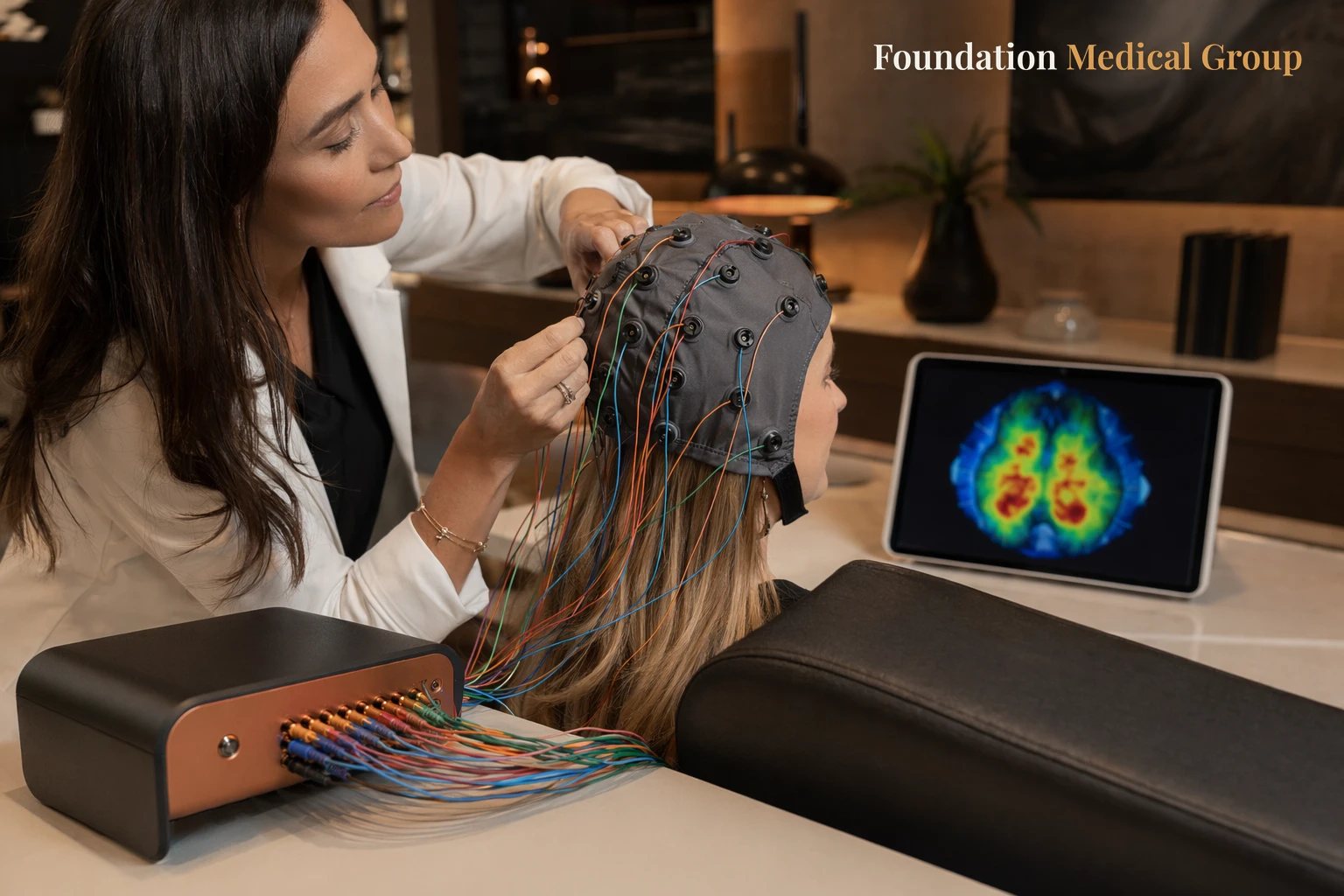
qEEG brain mapping Dallas clinics go a step further and add statistics. A qEEG map compares your recording against a database of people in your age band. Then it flags what sits outside the usual range. So instead of a clinician eyeballing a squiggle, you get a number you can hold onto, something along the lines of this region runs 2 standard deviations high in theta. That’s why qEEG shows up more in mental health planning, neurofeedback training, and addiction recovery than in plain neurology.
| Feature | EEG | qEEG |
|---|---|---|
| Data type | Raw brain waves | Quantified brainwave patterns |
| Analysis | Visual review | Statistical comparison |
| Best use | Neurological screening | Mental health and neurofeedback planning |
Brain Mapping Services Available in Dallas and Texas
Brain mapping Texas services run through private clinics, hospital systems, and specialized brain treatment centers. Dallas stands out as a major hub. Access reaches nearby cities too, through coordinated care models.
Many clinics offer qEEG brain mapping Texas patients can reach by referral or self-pay. Some programs add telehealth follow-up across Texas, which helps with continuity of care.
When you compare programs, 3 questions sort them fast. Does a doctor read the map, or only a technician? How many sensors does the recording use? A clinical montage runs at least 21 on the international 10-20 system. And how many neurofeedback sessions does the plan assume? A typical course runs 20 to 40, and the gap in cost between those two is not small. Ask before you book. It saves a conversation you’d otherwise have halfway through.
Clinical Uses of Brain Mapping for Mental Health
Brain mapping helps assess anxiety, depression, and other mental health conditions by showing how the brain answers stress. Clinicians use that data to guide neurofeedback therapy and fine-tune treatment goals.
Here’s where we should be honest, because the evidence is real but modest. Research from Micoulaud-Franchi and colleagues, published in Frontiers in Human Neuroscience in 2014, pooled 5 randomized trials covering 263 children. About 55 percent of them, 146 kids, trained with EEG neurofeedback. Parents rated total ADHD symptoms better by a standardized mean difference of 0.49, and inattention by 0.46. Teachers didn’t know which child had the training. They still scored inattention 0.30 better, though their ratings for total symptoms and hyperactivity missed significance. Read that as helpful for attention, thinner elsewhere, and not a cure.
Neurofeedback gives you real-time brain feedback so you can train healthier patterns. Over time, many patients notice better attention, steadier mood, and clearer thinking. Mapping also supports care for attention deficit disorder, brain fog, and some neurological conditions. After a traumatic brain injury, it can help flag disrupted neural pathways.
How Brain Mapping Supports Suboxone and Subutex Treatment
Brain mapping supports medication-assisted treatment by adding hard brain data to care decisions. At a suboxone clinic Dallas patients often get both medical management and brain-based assessment. Together, those show how addiction and stress are shaping brain function.
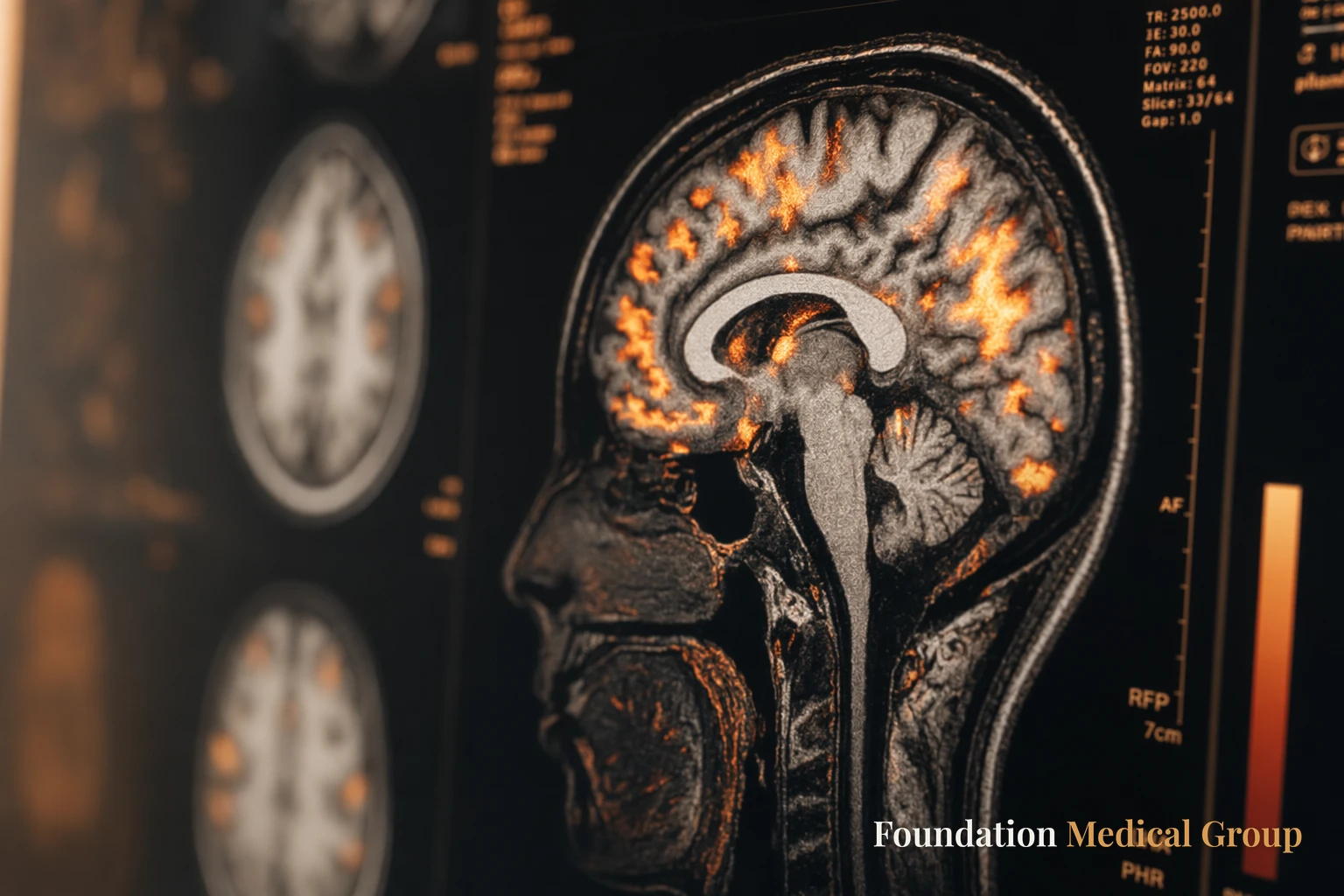
Clinics that offer Suboxone or Subutex care may use brain mapping to track progress over time. For patients hunting a subutex doctor Dallas Medicaid options run through physician-led programs. Brain data can guide neurofeedback training, therapy changes, and dose timing.
The medication side has firmer numbers behind it than the mapping side. A 2017 meta-analysis in The BMJ pooled 3 buprenorphine cohorts covering 15,831 people. All-cause mortality ran 4.3 deaths per 1,000 person-years while patients stayed in treatment, and it climbed to 9.5 once they left, which is the whole argument for staying on the medication rather than tapering off early. Overdose deaths ran 1.4 versus 4.6 on the same measure. Buprenorphine’s long tail is part of why. Its mean elimination half-life runs 24 to 42 hours, so one daily dose holds. Brain mapping doesn’t produce that effect. It just helps a doctor see how the rest of the plan is landing.
Insurance and Medicaid Coverage for Brain Mapping in Dallas
Insurance coverage for brain mapping depends on the provider and the diagnosis. Some plans cover EEG when a doctor orders it for a neurological concern. qEEG coverage is patchier, though many clinics offer payment plans to soften the cost.
Texas coverage sits in a tighter spot than most states. Worth knowing before you call. According to KFF’s tracker, 41 states plus the District of Columbia have adopted Medicaid expansion. Ten have not. Texas is one of the ten. So adult eligibility here is narrower than in Virginia or Utah. That shapes who qualifies before anyone asks about brain mapping.
Medicaid patients often ask how the pieces fit together. A suboxone doctor Dallas Medicaid program may pair brain mapping with addiction treatment. If you’re searching for suboxone clinics near me that accept Medicaid, ask how brain mapping fits the covered services. Texas Medicaid rules shift often. Clinics usually check benefits before they schedule you.
What to Expect During a Brain Mapping Appointment
A typical brain mapping session runs about 60 to 90 minutes. A technician places sensors on the scalp. You rest or work through simple tasks while it records. The process is quiet, calm, and painless.
Afterward, a doctor reviews the map and walks you through it, usually within 1 to 2 weeks. Patients often ask, does brain mapping really work? The fairest answer is that it guides care rather than delivers it. And the trial evidence for the neurofeedback it feeds is strongest for inattention. Another common question: is brain mapping legitimate? EEG has been in routine clinical use for roughly a century. You’ll find it in neurology and mental health clinics across the United States.
Choosing a Physician-Led Brain Mapping Clinic
Doctor oversight matters, because brain mapping data needs a trained reader. A physician-led clinic can tie the findings to a diagnosis, a medication decision, and a therapy plan. That kind of coordination helps most when a patient has more than one thing going on.
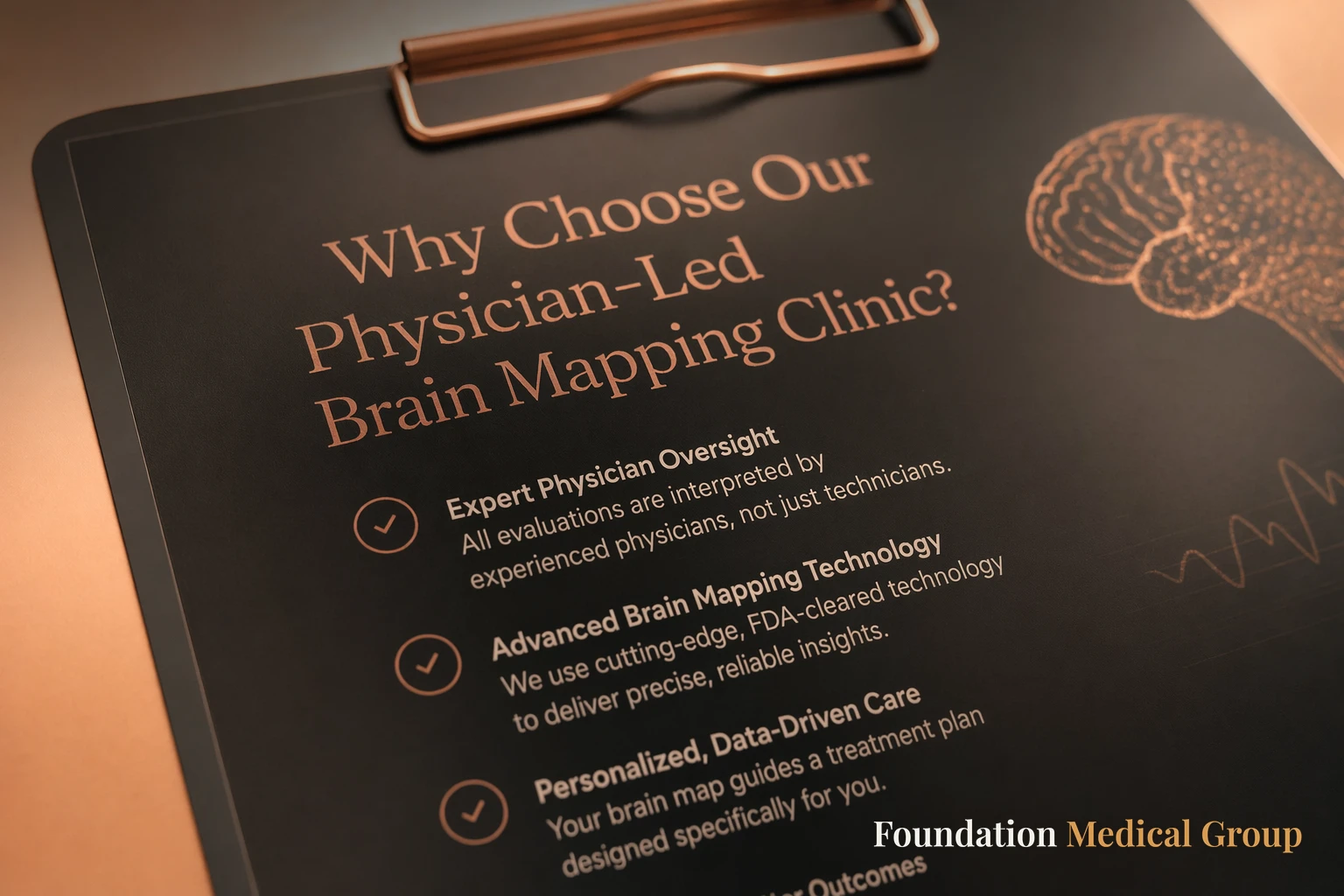
When you pick a Dallas clinic, ask about experience with neurofeedback and about follow-up. Some clinics also link patients to online suboxone doctors that take insurance, or to a suboxone doctor Texas Medicaid program. Joined-up care like that is what holds up over the long run.
Infographic: What a Brain Mapping Visit Measures
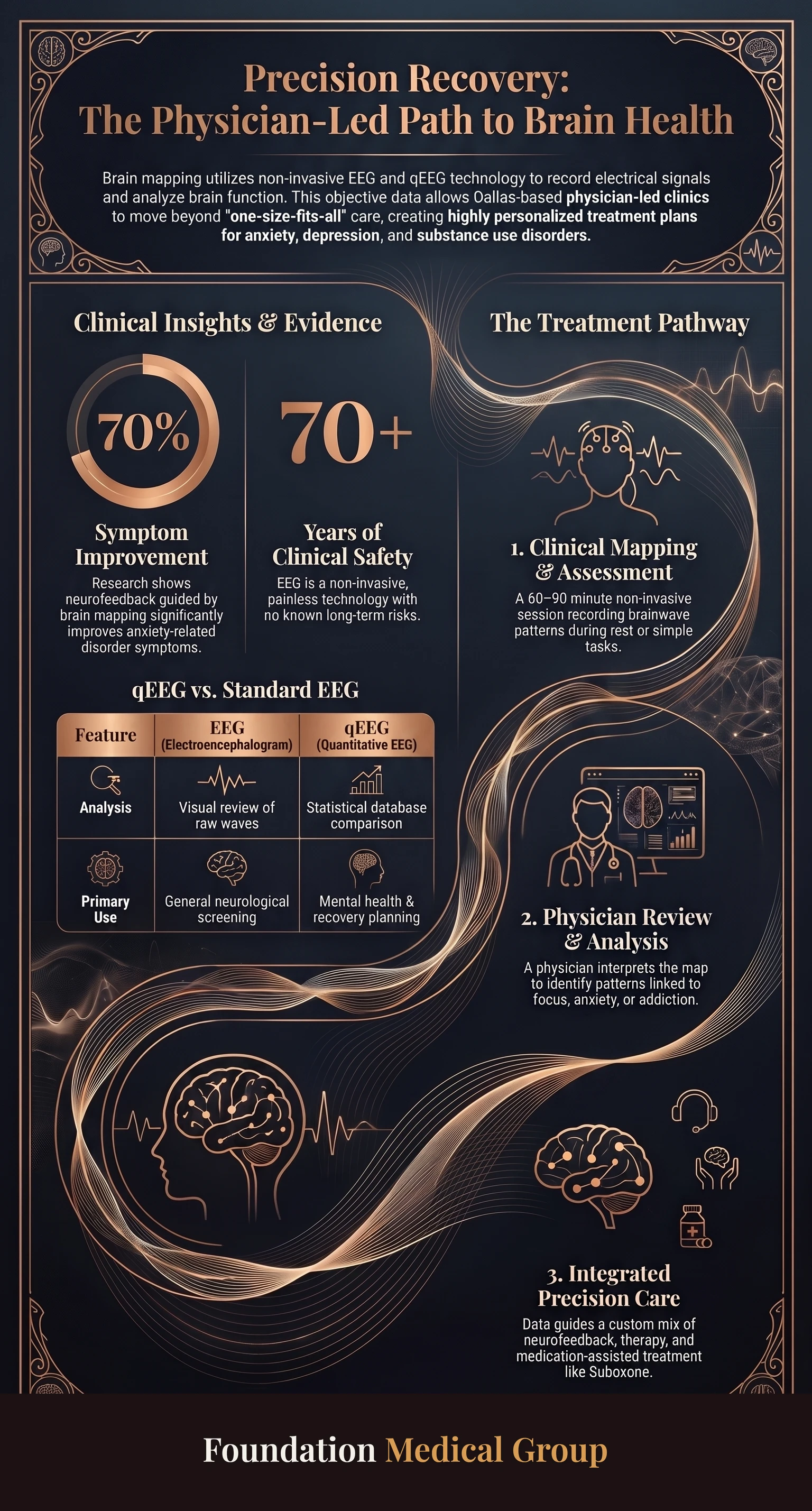
This infographic shows how EEG and qEEG mapping feed into a care plan. It walks through assessment, map review, neurofeedback training, and ongoing treatment at a brain treatment center. The visual shows how brain data supports mental health and addiction recovery alike.
FAQ
Is brain mapping safe for adults and children?
Yes. It’s non-invasive. EEG sensors only record electrical signals, and nothing gets sent into the brain.
Does brain mapping really work for anxiety?
Brain mapping flags brainwave patterns linked to anxiety. Paired with neurofeedback, many patients see symptoms ease.
Is brain mapping legitimate in mental health care?
Yes. EEG and qEEG are well-established tools used in neurology and mental health clinics nationwide.
Can brain mapping help with addiction treatment?
It supports addiction care by showing how substance use affects brain function. Clinics often pair it with Suboxone or Subutex treatment.
Will Medicaid cover brain mapping in Dallas?
Coverage depends on the diagnosis and the provider. Most clinics check Medicaid benefits before they book you.
Sources
- Electroencephalogram, StatPearls, NCBI Bookshelf.
- Micoulaud-Franchi et al., EEG neurofeedback treatments in children with ADHD, Frontiers in Human Neuroscience 2014.
- Sordo et al., Mortality risk during and after opioid substitution treatment, BMJ 2017.
- KFF, Status of State Medicaid Expansion Decisions.
Key Takeaways and Final Thoughts
Brain mapping Dallas services give patients real data on how their brain works and how that shapes behavior. Paired with neurofeedback, therapy, and physician-led care, it supports mental health and addiction recovery. Dallas and Texas clinics keep widening access, including Medicaid coordination and telehealth. If you want clearer answers about your own brain, and you’d rather have a number than a hunch, a local brain mapping Texas program run by a doctor is a solid place to start.