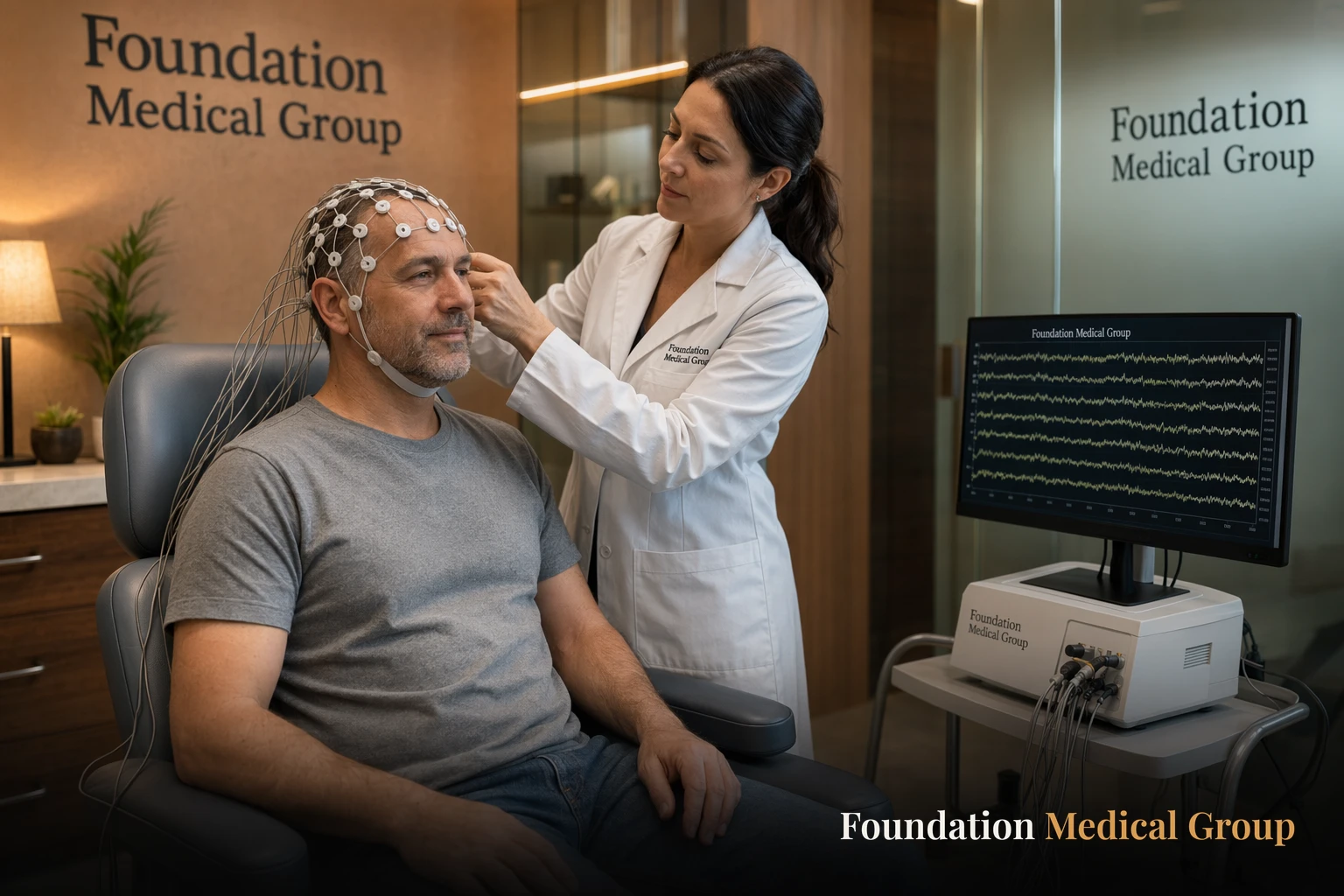
Brain mapping in Texas uses EEG and qEEG testing to measure brain activity. Doctors read those results to shape mental health care, addiction treatment, and neurofeedback plans. Every brain wave pattern is a bit different, so the plan built on it should be too. Clinics across Texas work from what the scan shows.
Brain mapping records brain waves and turns them into a picture of how the brain is working. In Texas it’s used most often for anxiety care, addiction recovery, learning disorders, and neurofeedback. Many clinics pair the testing with medication-assisted treatment. That pairing is where most of the real progress shows up.
Introduction to Brain Mapping in Texas
Brain mapping looks at how the brain works in real time. Clinics use it to check brain health and spot patterns that line up with symptoms. That data then helps guide care for anxiety, mood problems, learning disorders, and ADHD.
Texas has grown into a hub for brain health and addiction care under one roof. Big metro areas and North Texas towns offer EEG, qEEG, and neurofeedback with a doctor supervising.
And EEG is not a fringe test. Medicare’s 2024 public use file lists 159,728 office-based routine EEG studies under CPT 95816. The software-scored qEEG code, CPT 95957, shows 25,035. So the plain test is about 6 times more common than the computer-scored one. That gap tells you where the evidence sits.
What Is Brain Mapping and How Does It Work?
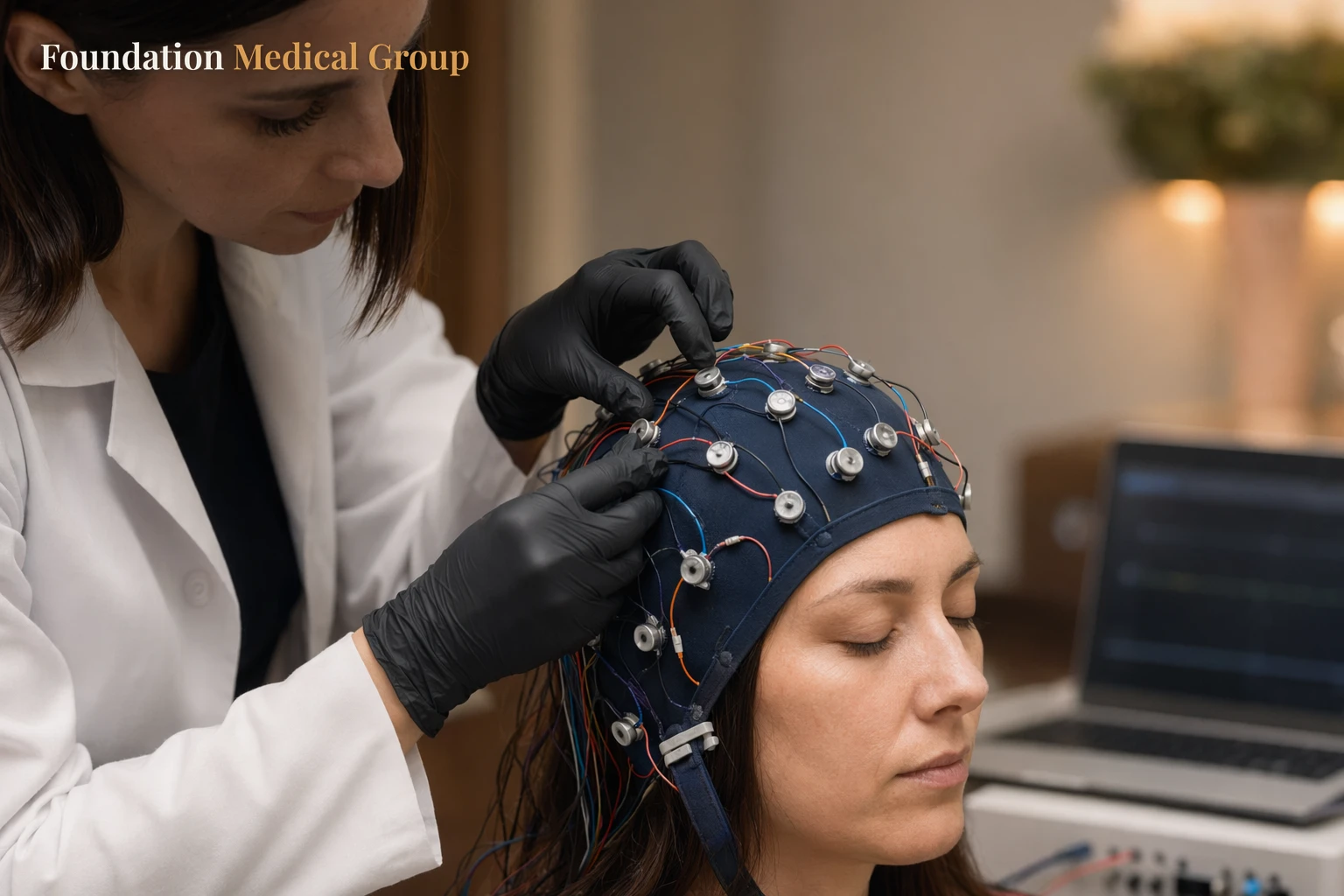
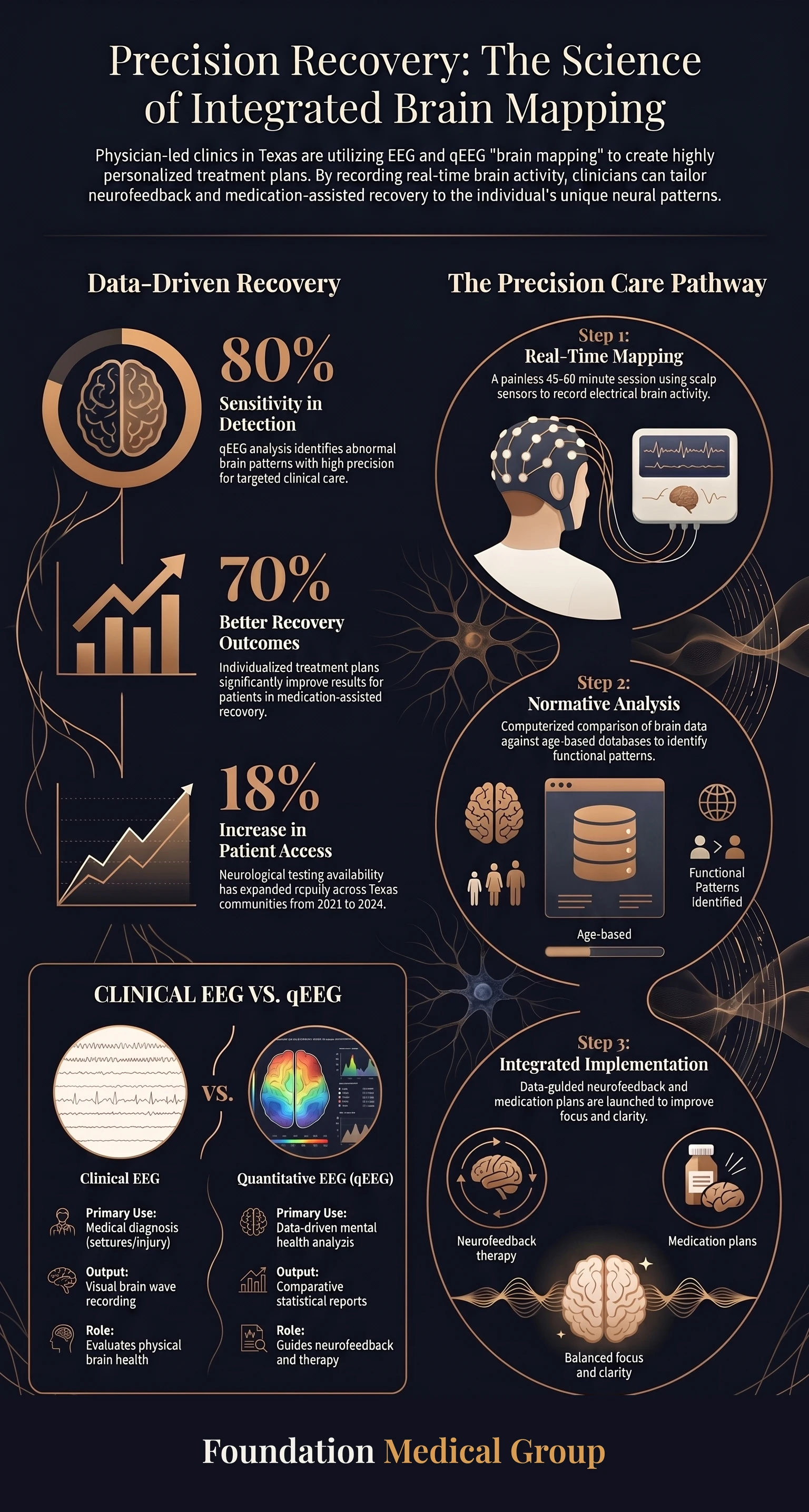
EEG clinics in Texas use electroencephalography to record electrical signals from the brain. Small sensors sit on the scalp. They pick up brain wave activity while you rest and while you do simple tasks. Nothing goes into your head. The test doesn’t hurt, and it runs 45 to 60 minutes.
qEEG brain mapping adds a software step. Quantitative EEG, also called a quantitative electroencephalogram, weighs your brain data against age-matched normal databases. The output is a qEEG brain map. A clinician reads it to see which patterns line up with focus, anxiety, learning disorders, cravings, or ADHD.
Regulators have looked at this closely. In July 2013 the FDA granted de novo authorization to the NEBA System (DEN110019). It’s an EEG-based aid for ADHD checks in children and teens. An aid. Not a diagnosis. That line still holds for every qEEG report you’ll read today.
These readings help a clinician see how brain function shows up in behavior. Results often shape neurofeedback training, medicine choices, and therapy plans. The goal is plain enough: clearer thinking and steadier focus over time.
EEG vs qEEG Brain Mapping for Mental Health
A standard EEG is a medical test. A neurologist often orders it to look for seizures, brain injury, or brain disease. It shows brain activity as it happens.
qEEG takes that same recording and scores it against a database. It’s the one most teams pick for neurofeedback planning. It can flag softer patterns tied to anxiety, learning problems, or brain fog. For a head injury or suspected brain disease, though, the standard EEG is still the better fit.
| Feature | EEG | qEEG |
|---|---|---|
| Primary use | Medical diagnosis | Data-driven analysis |
| Output | Visual brain waves | Quantitative reports |
| Common conditions | Seizures, brain injury | Anxiety, attention issues |
| Role in neurofeedback | Limited | Central to planning |
Brain Mapping Services Available Across Texas
Brain mapping services run out of doctor-led clinics across the state. Wait times are often shorter than the hospital route, and the care stays joined up. Plenty of people just search “brain mapping near me” and start there. If you go that route, look past the map pin and check who reads the report, because the value of a qEEG sits almost entirely in the clinician interpreting it rather than in the hardware.
Dallas and the North Texas towns around it hold most of the sites. A good number of them fold in neurofeedback, mental health care, and addiction treatment.
The need behind that growth is not abstract. CDC provisional data puts Texas at 4,491 drug overdose deaths in the 12 months ending December 2025. Two years earlier the count was 5,727. Opioid-involved deaths fell from 3,133 to 1,934 across the same stretch. Progress, yes. Still about 5 Texans a day. That is a hard number to sit with.
Brain Mapping in Dallas and North Texas
Dallas clinics run EEG and qEEG testing for both mental health and recovery care. Many work alongside Suboxone providers and buprenorphine prescribers in the same group. That helps people in recovery who need brain data read next to their treatment notes.
Neurofeedback and brain training often sit in the same building. One team, one chart, fewer repeated stories. Patients tend to like that part.
How Brain Mapping Supports Addiction Treatment
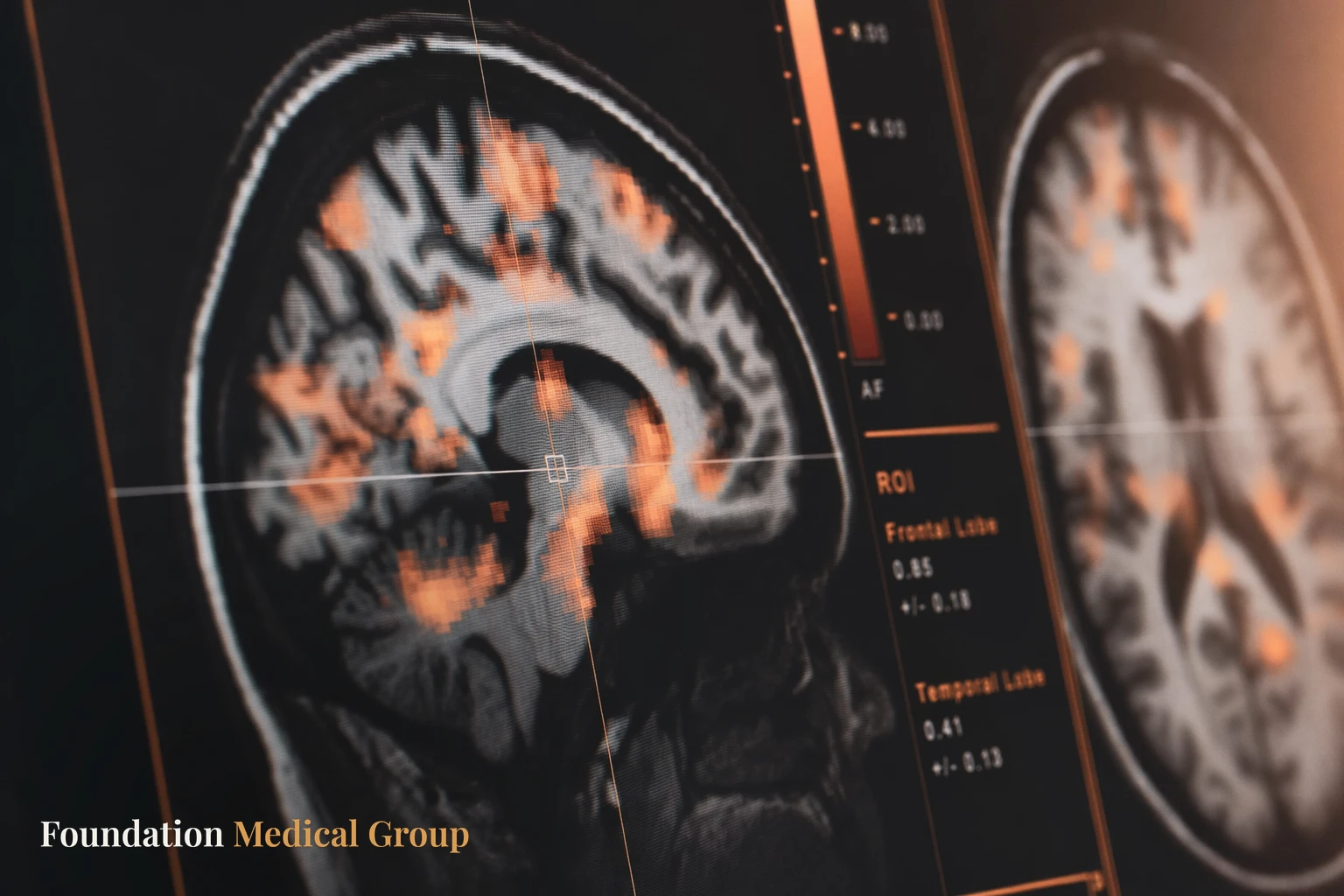
Brain mapping can show patterns tied to substance use disorder. But let’s be straight about where the weight sits in opioid recovery. It sits with medicine.
A 2020 study in JAMA Network Open followed 40,885 people with opioid use disorder. Buprenorphine and methadone were the two pathways tied to lower overdose risk. The adjusted hazard ratio came in at 0.24 at 3 months and 0.41 at 12 months. Residential detox showed no such benefit. Behavioral therapy on its own didn’t either. And just 12.5 percent of that group received one of the two medicines. That last figure is the frustrating part.
Clinicians use brain maps to fine-tune buprenorphine-based plans. The data can surface focus and attention problems that make recovery harder than it needs to be. That feeds dosing calls and neurofeedback planning.
Integrating Brain Mapping With Suboxone and Subutex Care
Many clinics run brain mapping next to Suboxone and Subutex care. People often search for subutex doctors near me, or for Suboxone doctors taking new patients. Brain data then feeds the treatment calls from visit to visit.
Neurofeedback may be added for brain training and anxiety. It’s a model that suits anyone who’d rather have one medical group handle both the testing and the recovery care.
Insurance and Medicaid Coverage for Brain Mapping
Insurance usually covers EEG when a doctor documents it as medically necessary. Texas Medicaid often covers a standard EEG ordered by a physician. qEEG is where it gets murky. Prior approval is common.
Read the fine print before you book. Aetna’s policy bulletin on quantitative EEG calls it medically necessary only as an add-on to a traditional EEG, and only in 7 named situations. ICU seizure screening is one. Pre-surgical epilepsy workups are another. For attention disorders, anxiety, depression, and alcoholism, the same bulletin labels it experimental. Other carriers word it differently. The pattern rhymes.
Rules in Virginia read differently again, which matters if you’re weighing options across state lines. Most clinics will check your benefits before they book you. Ask them to put the out-of-pocket number in writing.
Accessing Brain Mapping With Telehealth Follow-Up
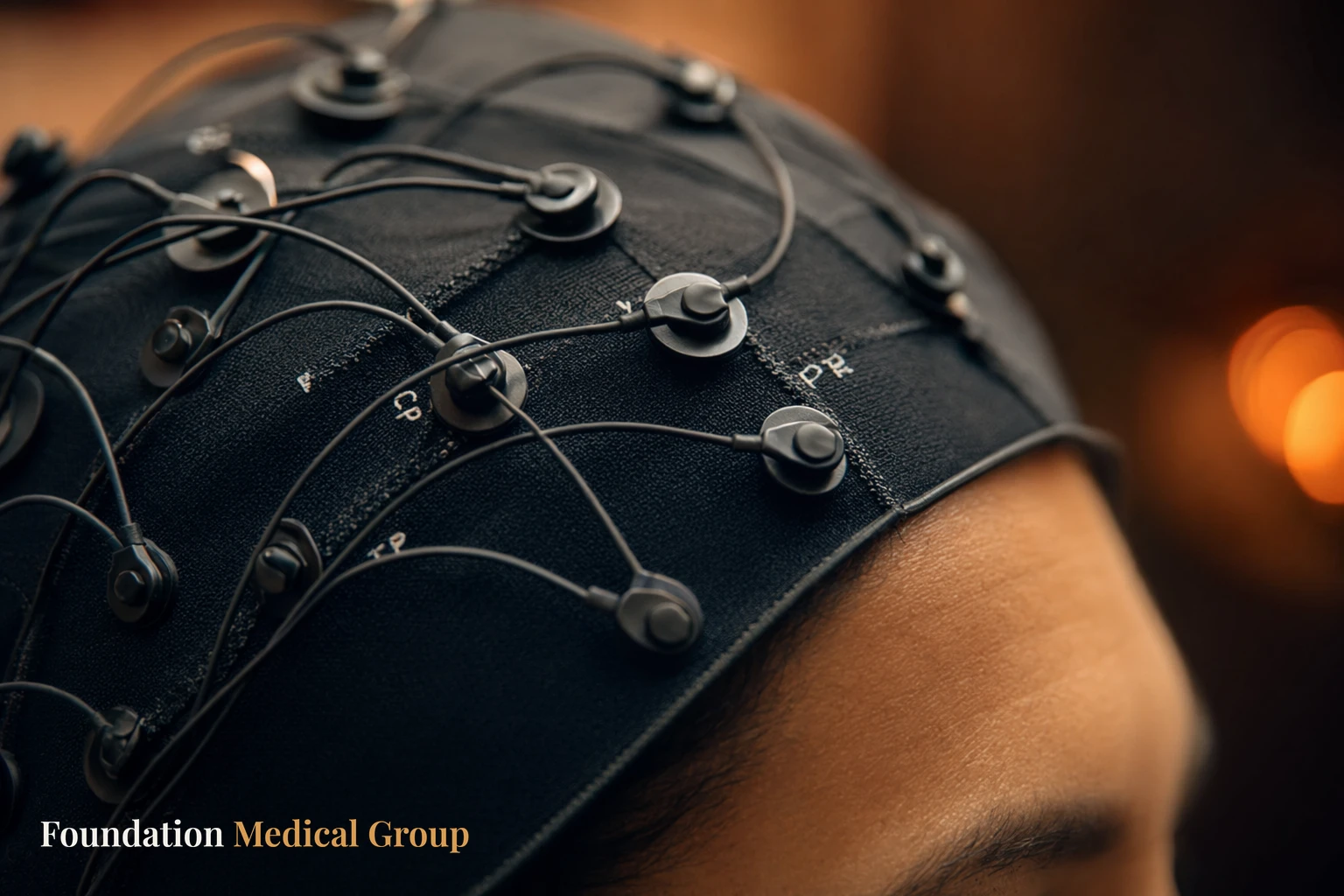
The test itself happens in person. The results review often doesn’t. Providers walk you through the brain patterns and the next steps on a secure video visit.
Telehealth also links people to online suboxone doctors that take insurance. Many of those doctors work with local testing sites, which helps a lot if you live an hour from the nearest clinic.
What to Expect During a Brain Mapping Appointment
Here’s the short version of the day:
- Skip caffeine before you come in.
- Wash your hair and leave the styling products off.
- Sensors go on the scalp, and they only listen.
- Plan on about an hour in the chair.
- Your report comes back once a clinician has read it.
Is it safe? Yes. The sensors record and nothing else, so the recording itself carries no known risk.
Cost is the sharper question. In 2024 Medicare data, clinics billed an average of $605.87 for CPT 95957 in an office setting. The allowed amount was $290.86. Sticker price and paid price are rarely the same number, and you want to know which one you’re being quoted.
Choosing the Right Brain Mapping Clinic
Start with doctor-led oversight. A board-certified provider should be the one reading your brain data, working from set standards rather than a hunch.
A few things worth asking on the phone:
- Who reads the report, and what are their credentials?
- Do you handle testing and treatment in one place?
- Is Medicaid accepted, and what is my out-of-pocket cost?
- How soon do results come back, and who explains them?
Clinics that run testing, mental health care, and addiction services together tend to hand off less and lose less along the way. Clear pricing and a real phone number are good signs.
FAQ
Is brain mapping safe?
Yes. EEG and qEEG are non-invasive. The sensors sit on the scalp and read signals. They don’t send electricity into your head.
Is brain mapping legitimate for mental health care?
It’s a real clinical tool. According to the American Academy of Neurology, EEG-based testing has been used for decades to check brain activity. The caution sits in how far the results get stretched.
How does neurofeedback use brain mapping data?
The map sets the target. Training sessions are built around the areas tied to focus, mood, and attention, then adjusted as the data shifts.
Can brain mapping help with anxiety and addiction?
It can flag patterns linked to anxiety and cravings, which helps with planning. On its own, though, it isn’t a treatment.
Does Medicaid cover brain mapping in Texas?
Texas Medicaid often covers a standard EEG when it’s medically necessary. qEEG coverage depends on the notes your doctor sends and the rules of your plan.
Key Takeaways and Final Thoughts
- EEG and qEEG measure brain activity and help guide mental health, addiction, and neurofeedback care.
- Routine EEG was billed about 6 times more often than qEEG in 2024 Medicare data.
- For opioid use disorder the evidence sits with medicine: buprenorphine and methadone cut overdose risk in a 40,885-person study.
- Coverage for qEEG is patchy, so check your plan and get the out-of-pocket figure first.
- Doctor-led clinics that test and treat under one roof cut down on repeat visits.
Brain mapping gives Texas clinics a clearer look at how a brain is working. It does its best work next to treatment that already has evidence behind it, not instead of it.
Sources
- Aetna Clinical Policy Bulletin 0221, quantitative EEG.
- FDA De Novo DEN110019, NEBA System, 15 July 2013.
- CMS Medicare Physician and Other Practitioners, by Geography and Service, 2024.
- CDC NCHS VSRR Provisional Drug Overdose Death Counts.
- Wakeman SE et al. Treatment Pathways for Opioid Use Disorder, JAMA Network Open 2020;3(2):e1920622.
- NIDA, Medications for Opioid Use Disorder.