A buprenorphine doctor in Dallas who takes Medicaid can treat opioid use disorder with proven care, in person or by video. Medicaid pays for Suboxone treatment when a qualified provider prescribes it and keeps an eye on how you’re doing. For a lot of Dallas residents, that coverage cuts the cost and gets treatment started sooner.
Introduction
This guide is for adults and families in Dallas who need help with opioid use disorder and rely on Medicaid. Access matters here. Dallas keeps reporting high rates of opioid use and addiction across age groups. Buprenorphine-based medicines, including Suboxone and Subutex, are FDA approved. They ease cravings and take the edge off withdrawal. You’ll learn how Medicaid works in Texas, how to find a suboxone doctor dallas residents trust, and how suboxone clinics near me that accept medicaid stack up against telehealth care.
What Is Buprenorphine and How It Treats Opioid Use Disorder
Buprenorphine is a partial opioid agonist. It’s used to treat opioid use disorder and opioid dependence. The medicine attaches to opioid receptors in the brain, which lowers cravings and blocks the effect of other opioids. That balance cuts overdose risk and lets you get through a normal day.
Care with medicine beats care without it, and the gap is worth seeing in numbers. A 2017 meta-analysis in The BMJ pooled 3 buprenorphine cohorts covering 15,831 people. All-cause mortality ran 4.3 deaths per 1,000 person-years while people stayed in treatment. It ran 9.5 once they dropped out. Overdose deaths ran 1.4 versus 4.6. The medicine helps most while you’re still on it. That’s why clinics talk so much about staying in care.
There’s a second reason it tends to hold people. In the X:BOT trial, published in The Lancet, 570 people took part. Of the 287 assigned to buprenorphine-naloxone, 270 actually started the medicine, or 94 percent. In the extended-release naltrexone group, 204 of 283 started, or 72 percent. Fewer people fall out at the starting line. A buprenorphine clinic in Dallas pairs the medicine with check-ins and counseling, and treating substance use next to mental health lowers relapse over time.
Suboxone vs Subutex: Key Differences Explained
Suboxone mixes buprenorphine with naloxone. The naloxone part discourages misuse, and that’s why Suboxone is the usual first pick. Many suboxone doctor dallas medicaid providers start there because of the safety profile.
Subutex holds buprenorphine and nothing else. Subutex doctors near me may use it in pregnancy, or when someone can’t tolerate naloxone. A subutex clinic near me will review your history, your risks, and the prescribing rules before picking one.
How Texas Medicaid Covers Suboxone and Buprenorphine
Texas Medicaid pays for buprenorphine care when an approved provider gives it. That usually covers office visits, urine testing, and the medicine itself when it’s medically needed. Your buprenorphine doctor dallas medicaid clinic has to be enrolled with Texas Medicaid.
Most suboxone clinic texas sites follow state rules on regular follow-ups and taking part in treatment. Texas Medicaid may cap early refills. It may also ask for counseling alongside the medicine.
One thing to know before you call, because it catches people out. Per KFF’s tracker, 41 states and the District of Columbia have adopted Medicaid expansion and 10 have not. Texas is one of the 10. So adult eligibility here is tighter than in Virginia or Utah, where expansion covers adults up to 138 percent of the federal poverty level. Plenty of working adults in Dallas won’t qualify on income alone. Which is frustrating. Better to find that out on the phone than at the pharmacy counter.
Methadone works too, but it usually means a daily trip to a methadone clinic. Buprenorphine bends more easily around a job, and you can get it through outpatient clinics across Dallas.
Costs, Copays, and Prior Authorization With Medicaid
If you do qualify, Texas Medicaid keeps your out-of-pocket cost low. Copays for covered visits and prescriptions are small. Prior authorization shows up at the edges: doses above the usual band, or a request to extend a plan. For reference, the Suboxone label puts maintenance between 4 mg/1 mg and 24 mg/6 mg a day. Ask at the top of that range and you can expect a review.
Clinics that also serve suboxone clinic virginia medicaid patients run the same kind of approval. Suboxone doctors near me that accept medicaid often handle the paperwork and chase the approval for you. That’s how you avoid a gap in your medicine.
Finding a Buprenorphine Doctor in Dallas That Accepts Medicaid
Start with the state Medicaid directory, or just call local addiction medicine offices. Ask them three things:
- Do you take Texas Medicaid, and are you enrolled right now?
- Do you offer suboxone treatment, subutex, or both?
- How much experience does the clinic have with opioid use disorder and substance use care?
Be careful with clinics that promise a same-day prescription and no real evaluation. A solid suboxone clinic dallas residents rely on will go through your history, talk about methadone as an option, and set out what to expect. Clear talk, a doctor in charge, and a real follow-up plan are the signs to look for.
In-Person Suboxone Clinics in Dallas
In-person care means a face-to-face exam. A suboxone clinic dallas site often adds drug testing, counseling referrals, and a joined-up care plan. It suits people with complex health needs or a second condition alongside the addiction.
A buprenorphine doctor dallas based clinic can also change your dose fast in the early weeks. And some people just feel more accountable when they have to show up. That matters more than it sounds.
Telehealth Suboxone Doctors for Texas Medicaid Patients
Telehealth suboxone doctors grew after 2020 and still serve patients across Texas. Telehealth suboxone doctors that accept medicaid can assess you by video and send the script to your local pharmacy.
Two federal rules changed here, and older pages still get both wrong. First, the DATA-Waiver, the old X-waiver, was scrapped by the Consolidated Appropriations Act of 2023. Any clinician with a standard DEA registration can now prescribe buprenorphine for opioid use disorder. Second, DEA and HHS extended the telemedicine flexibilities for controlled medicines through December 31, 2026. That’s what keeps video and audio-only starts on the table. A separate final rule, published January 17, 2025 at 90 FR 6504, allows an initial six-month supply after an audio-only visit. The prescriber has to check the state prescription drug monitoring program first.
Video care is private and easy to fit in. It may not suit you if you need medically assisted detox or close monitoring. Still, plenty of people do well with online suboxone doctors that take insurance for ongoing care.
What to Expect at Your First Suboxone or Subutex Appointment
The first visit is mostly assessment. Your provider goes through your opioid use history, your patterns, and any past attempts at treatment. Lab work and screening confirm the diagnosis and flag safety issues.
Induction starts once mild withdrawal sets in. The Suboxone label is specific about this. Wait for clear objective signs of withdrawal, and not less than 6 hours after your last opioid use. Day 1 usually tops out at 8 mg/2 mg in divided doses. You start at 2 mg/0.5 mg or 4 mg/1 mg, then step up by 2 or 4 mg about every 2 hours. Day 2 is often a single dose of up to 16 mg/4 mg. Most people feel the first dose take hold within 1 to 2 hours.
Follow-ups come thick and fast at first. They spread out as things settle and your recovery skills build.
A Physician-Led Approach to Long-Term Recovery
Ongoing medical oversight improves results. Doctor-led clinics watch how you respond to the medicine, how your mental health is doing, and where relapse risk sits. This model treats opioid addiction as a long-term condition, not a quick fix.
Foundation Medical Group works this way across locations, including buprenorphine clinic midlothian services and buprenorphine doctor midlothian medicaid programs. Medicine, counseling, and support for daily life do more together than any one of them alone.
Infographic: Texas Medicaid Buprenorphine Care at a Glance
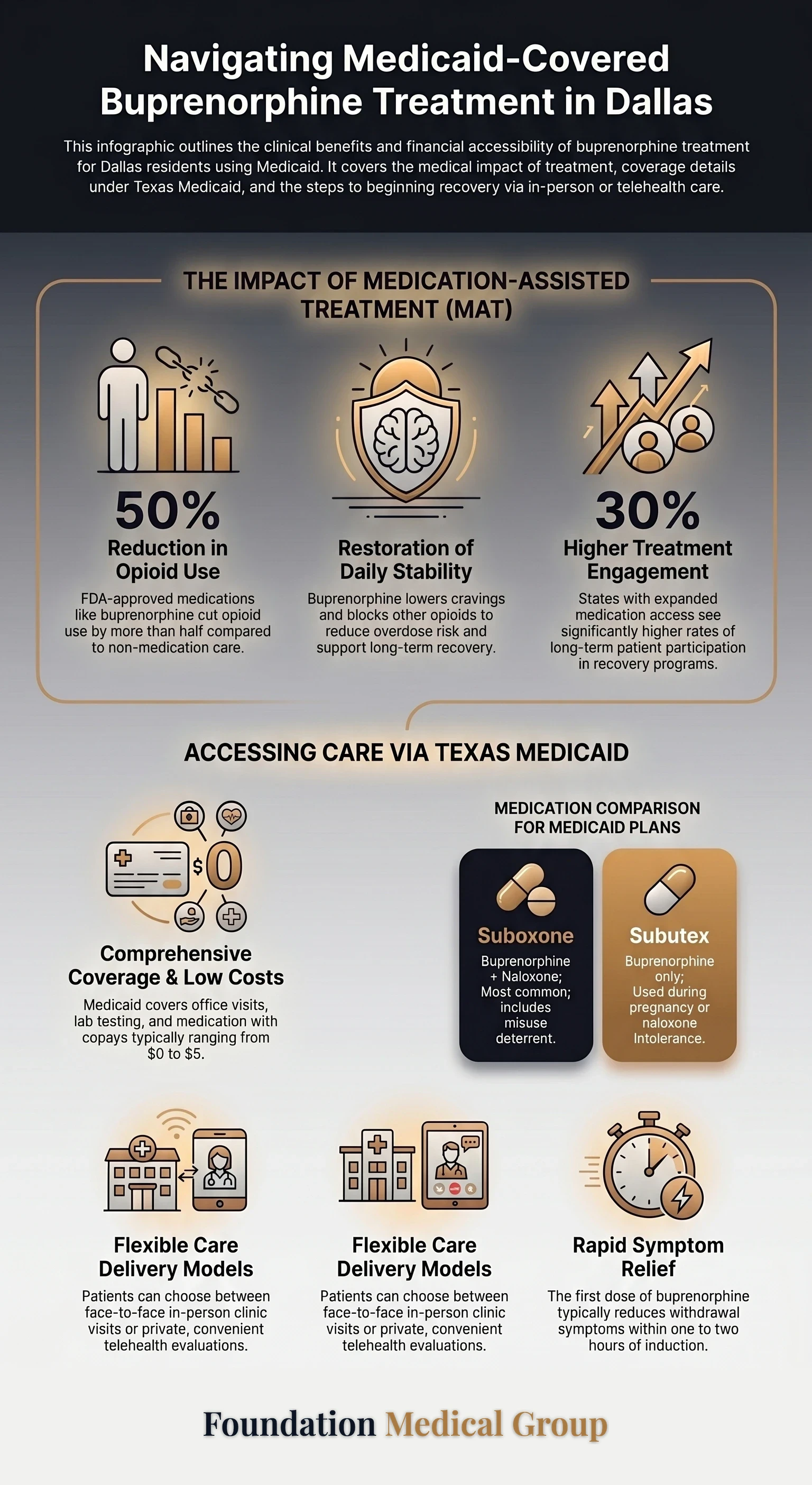
This infographic walks through each step, from finding suboxone clinics near me that accept medicaid to your first dose. It marks the Medicaid approval points and sets clinic care next to telehealth.
Frequently Asked Questions
Does Medicaid cover Suboxone treatment in Dallas?
Yes. Texas Medicaid covers suboxone treatment when it’s provided by an enrolled healthcare provider and supported with ongoing monitoring.
Can I see a suboxone doctor online with Medicaid?
Yes. Many telehealth suboxone doctors accept Medicaid and follow Texas and federal prescribing rules.
Is Subutex covered by Medicaid?
Subutex may be covered when it’s medically necessary, such as during pregnancy or with naloxone intolerance, and prescribed by a qualified provider.
How long does buprenorphine treatment last?
Treatment length varies. Some people use medication for several months, while others benefit from long-term maintenance to help prevent relapse.
Is buprenorphine safer than methadone?
Both medications are effective. Buprenorphine has a lower overdose risk, while methadone may work better for severe opioid dependence managed through a methadone clinic.
Sources
- Sordo and colleagues, Mortality risk during and after opioid substitution treatment, The BMJ (2017).
- Lee and colleagues, X:BOT comparative effectiveness trial, The Lancet.
- FDA prescribing information, Suboxone sublingual film.
- DEA and HHS, Expansion of Buprenorphine Treatment via Telemedicine Encounter.
- DEA and HHS, Fourth Temporary Extension of Telemedicine Flexibilities.
- KFF, Status of State Medicaid Expansion Decisions.
Key Takeaways
Buprenorphine treatment is within reach for Dallas residents on Medicaid. In-person and video care both support safe recovery from opioid use disorder. A doctor-led suboxone clinic dallas patients trust adds stability and safety, and it makes the long haul easier to hold on to.