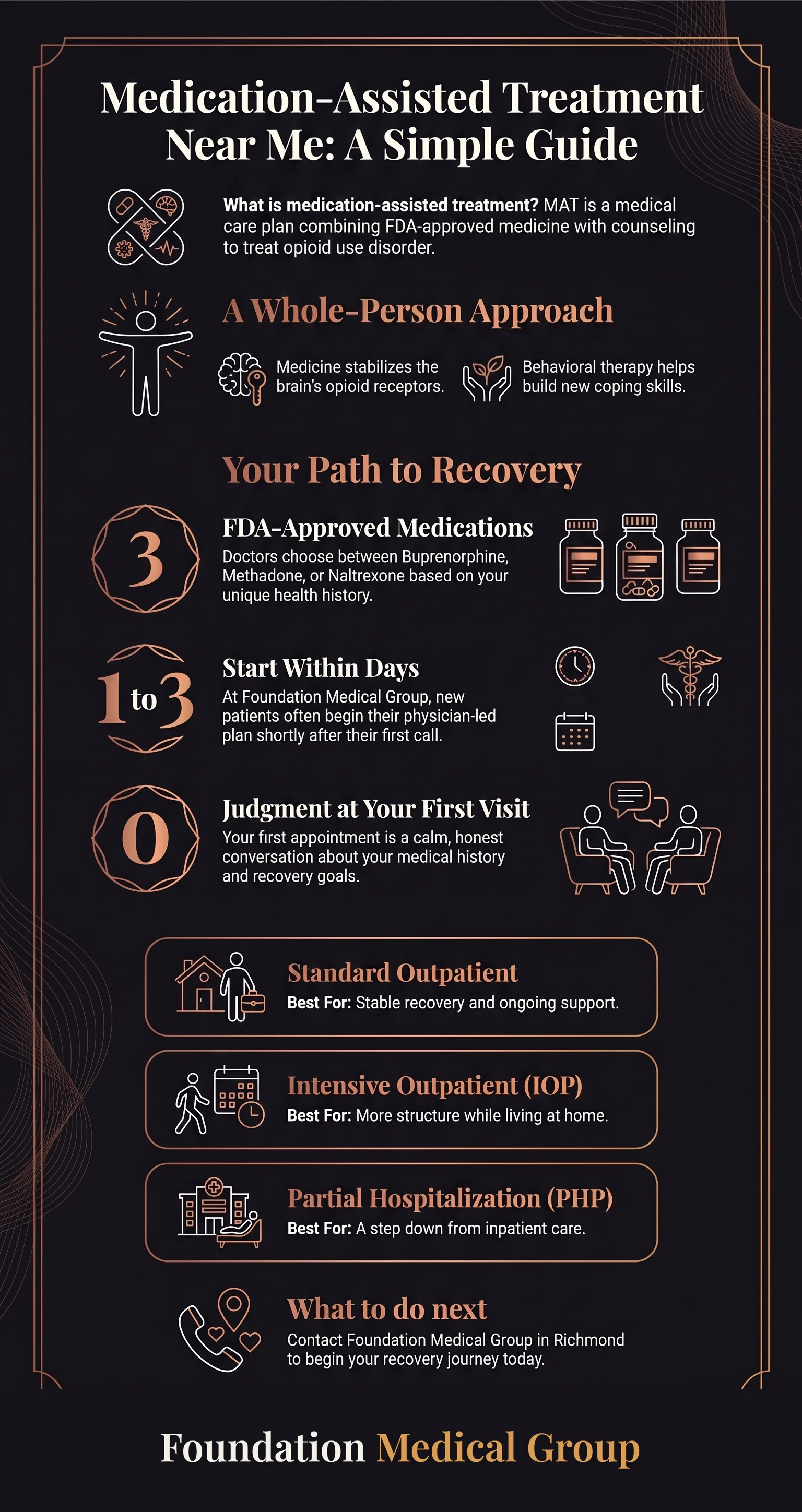
Medication assisted treatment near me means care that pairs an FDA approved medicine with counseling to treat opioid addiction. The medicine eases withdrawal and cravings. Therapy supports the rest of your recovery. In Richmond, Virginia, Foundation Medical Group offers doctor-led MAT, and you can often start within a few days.
If you’re searching for help, that first step already matters. Opioid addiction is a medical condition, not a moral failing. MAT is one of the most effective tools we have for it. This guide walks you through how MAT works and which medicines are used. It also covers what MAT costs and what happens at your first visit. We keep it plain and simple, so you know exactly what comes next.
What Is Medication-Assisted Treatment?
Medication-assisted treatment (MAT) is the use of FDA approved medications to treat a substance use disorder. It pairs those medicines with counseling and support. Most often, MAT treats opioid dependence. That includes dependence on prescription pain pills and on street opiates.
The medicine part of MAT works on opioid receptors in your brain. Those are the same receptors that opioids act on. Buprenorphine, for example, settles onto them gently. It calms cravings and eases withdrawal without creating a high. That steadiness gives you room to heal.
But MAT is more than a prescription. It pairs the medicine with therapy, behavioral health support, and regular check-ins. According to the Substance Abuse and Mental Health Services Administration (SAMHSA), this whole-person approach is the standard for addiction treatment. Your body and your mental health both get care.
How Does Medication-Assisted Treatment Work?
MAT treats the physical and the emotional sides of opioid dependence at the same time. The medicine settles the brain and body. Therapy helps with the habits, stress, and mental health conditions that often travel alongside substance use.
Three medicines are FDA approved for opioid dependency. Each one does a slightly different job.
- Buprenorphine is a partial opioid agonist. Buprenorphine treatment eases withdrawal and cravings, with a lower overdose risk than a full opioid. You may know it as Suboxone, which pairs buprenorphine with naloxone. You can read more about MAT with Suboxone as an option. Unlike methadone, a doctor can prescribe it in an office visit instead of a daily clinic.
- Methadone is a full opioid agonist. It’s given through a licensed opioid treatment program, sometimes called a methadone clinic. You visit more often than you would for buprenorphine.
- Naltrexone blocks the effect of opioids. It isn’t an opioid at all. So you start it only after you’ve fully stopped using.
According to the National Institute on Drug Abuse (NIDA), these medicines lower the risk of opioid overdose. They also help people stay in care longer. That’s why doctors treat them as a first choice, not a last resort. Since 2023, prescribers no longer need a special federal waiver for buprenorphine. Office-based care is easier to find now than it was a few years ago.
Your doctor helps you pick the treatment option that fits your health, your history, and your daily life. The right answer looks a little different from person to person.
How Do I Find Medication Assisted Treatment Near Me?
Start by looking for a MAT clinic near you that offers addiction medicine. You can also ask your primary care doctor for a referral. The federal directory at FindTreatment.gov lists options near your ZIP code. Many outpatient behavioral health clinics provide MAT alongside psychiatry and therapy. You don’t need to travel far or check into a hospital.
When you call a treatment center, a few simple questions help you compare your options:
- Do you offer buprenorphine, methadone, naltrexone, or all three?
- Is a doctor on staff, and are they taking new patients?
- Do you include therapy and follow-up visits?
- Do you accept my insurance or Medicaid?
- How soon can I start?
- What happens if I need more support later on?
In Richmond, Virginia, Foundation Medical Group provides doctor-led MAT as part of our behavioral health treatment services. We treat opioid addiction with medicine, therapy, and steady follow-up. We see patients from across the Richmond area, including Henrico, Chesterfield, and Midlothian, VA. We also serve the Dallas, Texas area. Many of our new patients start within 1 to 3 days of that first call.
Does Insurance Cover MAT?
Most health plans cover MAT, and so do Medicaid and Medicare. Federal parity rules require many plans to treat substance use care the way they treat other medical care. Even so, the details differ from plan to plan. Some plans ask for prior approval on a medicine. Others limit which pharmacy you can use.
Before your first visit, call the number on your insurance card. Three questions clear up most of it:
- Is this treatment center in network for addiction treatment?
- What will I pay for each visit?
- Which medicines are covered, and do any need approval first?
If you don’t have insurance, ask the clinic about self-pay rates. Many treatment centers also help you apply for Medicaid. Cost is a fair worry, and it’s worth asking about on your very first call.
What Are the Levels of Care in Addiction Treatment?
Not everyone needs the same amount of support. Treatment programs come in levels, and your care team helps you find the right fit. Some people do well with a weekly visit. Others need more structure at the start.
The table below shows common outpatient treatment options and what each one usually looks like. Your own plan may differ based on your needs.
| Level of care | What it involves | Best for |
|---|---|---|
| Standard outpatient | Medication management plus regular therapy visits | Steady recovery and ongoing support |
| Intensive outpatient program (IOP) | Several therapy sessions each week, plus medicine | More structure while living at home |
| Partial hospitalization program (PHP) | Care most days of the week, close to full-time | A step down from inpatient, or a step up from IOP |
| Opioid treatment program | Daily or frequent dosing, often for methadone | Structured, closely watched opioid care |
Most people at Foundation Medical Group start with standard outpatient MAT. If you need more support, we can step it up. If life settles, we can step it back down. The goal is comprehensive treatment that meets you where you are.
What Happens at My First MAT Appointment?
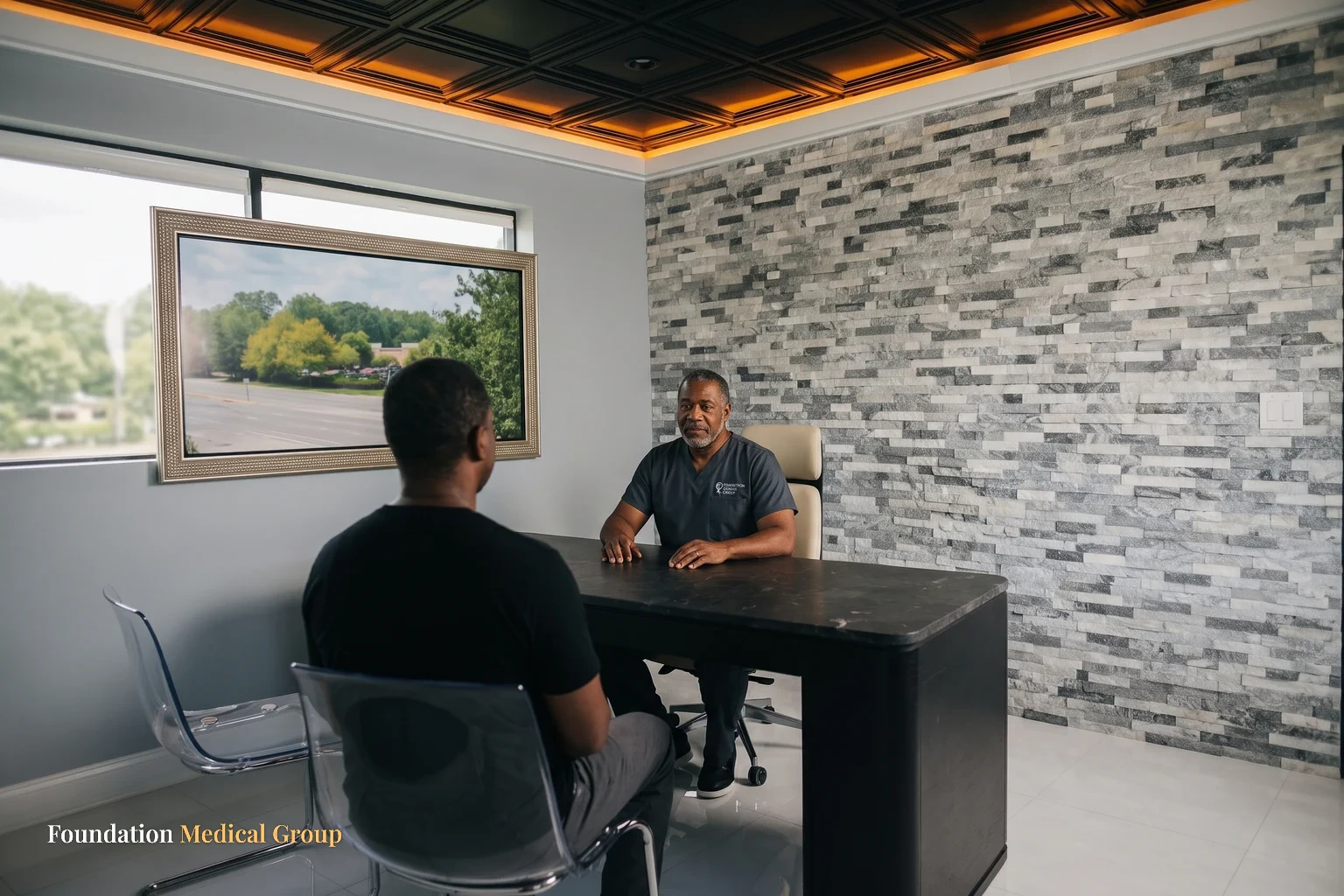
Your first visit is a calm, honest conversation. Your doctor reviews your medical history, your drug use, and your recovery goals. There’s no judgment here. The more open you are, the better we can help.
Together, you and your doctor pick a medicine and talk through how it works. You learn about dosing, safety, and side effects. For buprenorphine, treatment often begins about 12 to 24 hours after your last opioid dose. By then you’re already in early withdrawal. That timing lowers the risk of a reaction called precipitated withdrawal. In our Richmond clinic we walk you through it step by step.
You may also complete a drug screen and sign a simple treatment agreement. Then you build a plan together. That plan usually includes medication management, therapy, and follow-up visits. Early on, visits may be weekly. As you steady out, they space out too.
It helps to bring a few things with you. Bring a photo ID and your insurance card. A list of your current medicines helps too, along with the name of your pharmacy. If a family member helps with your recovery, they’re welcome to come along.
In our experience, patients often feel real relief from withdrawal within an hour or two of the first buprenorphine dose. One patient told us it was the first calm morning he’d had in years. That first bit of steadiness can be a turning point.
Why Is Counseling Part of MAT?
Medicine treats the physical side of opioid dependence. Counseling treats the rest. Behavioral therapy helps you understand triggers, build coping skills, and repair daily routines. It also treats mental health conditions like depression or anxiety, which often show up alongside substance use.
This pairing is why MAT tends to work better than medicine alone, and far better than willpower by itself. Someone in recovery might use counseling to plan around a stressful commute past an old neighborhood. Meanwhile, the medicine keeps cravings quiet. SAMHSA and the American Society of Addiction Medicine both back medicine combined with counseling as a standard of care. Body and mind heal together.
At Foundation Medical Group, our psychiatry and therapy teams work side by side with your MAT care. If you’re also struggling with your mental health, you get mental health treatment in the same place. You don’t have to tell your story twice, or drive to two clinics. That kind of compassionate care makes addiction recovery steadier.
Key Takeaways
- MAT uses FDA approved medications plus counseling to treat opioid addiction.
- The three approved medicines are buprenorphine (Suboxone), methadone, and naltrexone. Your doctor helps you choose.
- MAT eases withdrawal and cravings by acting on opioid receptors, without creating a high.
- Care comes in levels, from standard outpatient to intensive outpatient and partial hospitalization programs.
- Counseling and medication management are part of the plan, not extras.
- Most insurance plans, Medicaid, and Medicare cover MAT, though the details vary by plan.
- MAT is well studied and backed by SAMHSA, NIDA, and the FDA when a doctor prescribes and monitors it.
- In Richmond, Virginia, Foundation Medical Group offers doctor-led MAT and can often start you within days.
Start Your Recovery in Richmond
Reaching out for opioid addiction treatment takes courage, and you don’t have to figure it out alone. MAT gives you a proven, doctor-led path forward, with real support at every step. Withdrawal and cravings can be managed. Recovery is possible, and plenty of people are living it right now.
If you’re searching for medication assisted treatment near me in the Richmond, Virginia area, we’d be glad to help. Reach out to Foundation Medical Group to ask about openings, insurance, and getting started. Our care team is here, ready to walk this recovery journey with you.