
Online Subutex doctors that take insurance give you fast, secure buprenorphine care for opioid use disorder over video. An online subutex doctor looks at your opioid use and your medical history. They prescribe when it fits, then keep the plan going with real follow up. It works much like an online suboxone doctor. What draws people to it is the privacy, and the plain fact that you can get seen at all.
Finding Subutex care can feel overwhelming, especially when insurance approval is involved. Online treatment reduces wait times and helps people connect with a qualified healthcare provider without travel. For many people, that speed can prevent relapse or an emergency department visit. I’ve seen this happen, someone waits weeks for an visit, then uses again. Virtual care changes that timeline.
Introduction to Online Subutex and Suboxone Care
Online Subutex and Suboxone care delivers medication assisted treatment through secure video visits on telehealth platforms. Your doctor goes through your medical history, your opioid use, and any past treatment before suggesting buprenorphine. When it fits, care starts fast. Then it keeps going, as one part of a wider plan built for the long haul.
Many people search for Subutex care because the local clinic is full, or the wait is weeks long. Video care wipes out the distance and opens the door to national addiction specialists. It works well if you need to fit care around a job, want privacy, or just can’t drive an hour each way. Rural counties tend to benefit most, simply because the drive to the nearest prescriber is longest there.
Two federal changes made this possible, and both are worth knowing by name. The DATA-Waiver, the old X-waiver, was scrapped by the Consolidated Appropriations Act of 2023. Now any clinician with a standard DEA registration can prescribe buprenorphine for opioid use disorder. And DEA and HHS extended the telemedicine flexibilities for controlled medications through December 31, 2026. That’s what keeps a first visit by video, or even audio-only, on the table.
Care standards remain the same as in person visits. Providers still monitor progress, adjust medicine, and coordinate pharmacies. Telehealth changes the setting, not the quality of treatment, and people receive the same level of clinical oversight. And honestly? Some people attend visits more consistently online.
Why Telehealth Improves Retention
Telehealth reduces missed visits. No commute. No waiting room. The buprenorphine itself helps here too, because its mean elimination half-life runs 24 to 42 hours. One daily dose holds you through a missed alarm or a long shift, unlike a methadone program that expects you at the window most mornings. That surprised me, honestly, the first time I saw how much of retention is just logistics.
Retention improves for practical reasons too. People can schedule visits around work, childcare, or transportation limits. A missed visit often leads to a missed prescription, which increases relapse risk. Telehealth lowers that chain reaction.
Access for Underserved Communities
Telehealth also helps people who avoid care because of stigma. Logging in from home feels safer for many. I’ve heard people say they finally stayed in treatment because no one at work or in town knew. That kind of privacy can change behavior, and outcomes.
What Is Subutex and How Is It Different From Suboxone
Subutex is a buprenorphine only medicine used to treat opioid use disorder. Buprenorphine is a partial opioid agonist at the mu receptor, which is why it eases cravings and withdrawal while carrying a ceiling effect on respiratory depression.
The mortality data is the part worth reading twice. A 2017 meta-analysis in The BMJ pooled 3 buprenorphine cohorts covering 15,831 people. All-cause mortality ran 4.3 deaths per 1,000 person-years while people stayed in treatment, versus 9.5 after they stopped. Overdose deaths ran 1.4 versus 4.6. Staying on the medicine, and staying reachable, is most of the benefit.
Suboxone combines buprenorphine with naloxone in a 4 to 1 ratio. The film comes in 4 strengths: 2 mg/0.5 mg, 4 mg/1 mg, 8 mg/2 mg, and 12 mg/3 mg. Naloxone deters misuse by injection and improves safety for many people starting suboxone treatment. Because of that profile, Suboxone is often the first treatment option offered by a doctor.
Some people require Subutex instead. Pregnancy, naloxone intolerance, or specific prescribing information can make Subutex the better choice when buprenorphine alone is clinically appropriate. In these cases, a Subutex prescription is carefully documented as part of a structured Subutex medicine program with close monitoring.
Clinical Scenarios Where Subutex Is Used
Pregnant people are a common example. ACOG guidance has long supported buprenorphine without naloxone during pregnancy in many cases. Another scenario involves people with documented adverse reactions to naloxone. It’s not common, but it happens.
There’s a third case people miss. The Suboxone label itself says that people dependent on methadone or other long-acting opioids should start on buprenorphine alone, the Subutex-style product, on Days 1 and 2. So the mono product isn’t a lesser option. It’s the labelled choice in a specific spot.
Both medications are evidence based and widely used by addiction medicine doctors across the US. In the X:BOT trial in The Lancet, 570 people were randomized. Of the 287 assigned to buprenorphine-naloxone, 270 got started on it, or 94 percent. In the extended-release naltrexone group, 204 of 283 did, or 72 percent. At 24 weeks, relapse occurred in 163 of 287 on buprenorphine-naloxone (57 percent) versus 185 of 283 (65 percent).
Safety and Dosing Considerations
Dosing is individualized, though the label gives clear rails. Day 1 usually means up to 8 mg/2 mg, given in divided doses. You start at 2 mg/0.5 mg or 4 mg/1 mg. Then you step up by 2 or 4 mg about every 2 hours. Day 2 is often a single dose of up to 16 mg/4 mg. Maintenance usually sits between 4 mg/1 mg and 24 mg/6 mg per day. The label also warns the opposite way from what you’d expect. A too-gradual induction, stretched over several days, led to a high drop-out rate in the studies. Going too slow has its own cost.
How Online Subutex and Suboxone Doctors Work
Online Suboxone care starts with intake forms and a virtual review using telehealth technology. The provider reviews opioid use history, current medications, and treatment goals. This visit establishes a personalized addiction treatment program with a clear treatment plan focused on safety and progress using buprenorphine when indicated.
If appropriate, the provider issues a Suboxone prescription or Subutex prescription and sends it electronically to a pharmacy. Follow up visits occur regularly through telehealth and include counseling referrals, dose changes, and plain teaching from a clear medication guide you can read anytime.
Many online platforms function as an online Suboxone clinic, offering full-service care rather than medicine alone. That model supports people with behavioral health tools, check ins, and accountability. A final rule published January 17, 2025 at 90 FR 6504 sets the limits on the audio-only version. First the prescriber reviews your state prescription drug monitoring program data. Then an initial 6 month supply may be issued by audio-only means, split across several prescriptions. After that, an in-person review or another authorized form of telemedicine takes over.
What Ongoing Monitoring Looks Like
Monitoring includes regular check ins, prescription monitoring program reviews, and occasional urine screening. Some programs mail test kits. Others coordinate local labs. Either way, accountability stays intact.
Monitoring also helps catch issues early. Dose adjustments, side effects, or breakthrough cravings can be addressed before they spiral. That early intervention matters.
Communication Between Visits
Many platforms offer secure messaging. People can ask questions between visits. That small access point often prevents bigger problems later.
Insurance and Medicaid Coverage for Online Subutex Doctors
Online Subutex doctors that take insurance often work with commercial insurance, private insurance, and Medicaid. Coverage typically includes telehealth visits, medication management, and monitoring for buprenorphine based care. Some plans also include counseling and lab work as part of the addiction treatment program.

Coverage varies by state and insurer. TennCare Medicaid, for example, covers buprenorphine treatment but often requires prior authorization and ongoing paperwork. The provider submits prescribing information to justify the medicine choice and treatment plan.
People should confirm their insurance plan details, including copays, rehab coverage, and Suboxone cost. Eligibility itself varies more than coverage does. Per KFF’s tracker, 41 states and the District of Columbia have adopted Medicaid expansion. Ten have not. So an adult who qualifies on income in Virginia or Utah may not qualify in Texas or Georgia. Expanded telehealth policies have also widened affordable online Suboxone treatment for people with private insurance and commercial insurance.
Tips for Verifying Coverage
Call the number on your insurance card. Ask about telehealth addiction treatment and buprenorphine coverage. It sounds basic, but many people skip this step.
Also ask about prior authorization timelines. Some plans approve within 24 to 72 hours. Knowing that window can reduce stress.
Common Insurance Pitfalls
Denials happen. Often due to missing paperwork. Programs with insurance teams help fix this fast, which saves time and frustration.
Finding Subutex Doctors Accepting New People
Virtual clinics often have shorter wait times than in person programs. Many offer same week visits and ongoing support through online access and secure telehealth messaging. This faster entry into treatment can be critical for people at risk of relapse.
When comparing options, compare programs carefully. Look for programs that offer the following.
- A clear addiction treatment program with medicine and follow up.
- Straight talk on Suboxone cost, the medicine itself, and what your plan covers.
- Links to local pharmacies, labs, and other healthcare provider services.
Red Flags to Watch For
Be cautious of programs that only prescribe medicine without follow up. Lack of monitoring increases risk. Structured care matters, even online.
Switching providers is common. People should request records from a previous healthcare provider to avoid gaps in care. Continuity improves outcomes and supports a stable treatment plan over time. I’ve seen smoother transitions lead to fewer setbacks.
Telehealth Suboxone and Subutex Doctors by State
Rules for virtual addiction treatment vary by state and affect how telehealth is delivered. These rules can influence visit frequency, lab requirements, and pharmacy coordination. Coverage depends on Medicaid, private insurance, and commercial insurance contracts.
Telehealth has expanded rapidly since 2020, and many states now allow ongoing virtual visits for opioid use disorder with buprenorphine. This shift has helped more people stay engaged in treatment without interruption.
Below are examples of how access works in several states.
Virginia Online Suboxone and Subutex Clinics
Virginia offers statewide virtual addiction treatment options. Telehealth programs connect people with national addiction specialists while coordinating care locally. Some programs also integrate wellness services like medical weight loss alongside addiction care.
Virginia Medicaid covers buprenorphine with paperwork, through the Addiction and Recovery Treatment Services benefit, ARTS, which launched in April 2017. In its first 15 months, the number of members treated for opioid addiction climbed 80 percent, from about 9,000 to nearly 16,400. Opioid prescriptions for members fell 28 percent. The state’s Preferred Office-Based Opioid Treatment model pairs the prescriber with a co-located licensed behavioral health clinician, rather than leaving the medicine to stand alone. Monthly telehealth follow ups are common and support long term recovery.
Texas Online Suboxone and Subutex Doctors
Texas allows telehealth care statewide, though Medicaid rules are strict and Texas sits among the 10 states that have not adopted expansion, which narrows adult eligibility considerably. High demand in Dallas, Houston, and San Antonio makes online Suboxone treatment a practical solution when clinics are full and people need timely care.
Some programs also offer data driven tools and optional wellness services. These extras support full care and help people track progress between telehealth visits.
Utah Online Suboxone and Subutex Clinics
Utah residents can access telehealth care across the state. Coverage rules are straightforward, with regular virtual check ins required. Many programs coordinate counseling and pharmacy services to support people throughout treatment with buprenorphine.
Georgia Online Suboxone and Subutex Doctors
Georgia residents can access online Suboxone treatment through a licensed provider using telehealth platforms. Medicaid covers treatment with monitoring and paperwork. Virtual care reduces travel and supports consistency for people balancing work and family.
What to Expect During a Virtual Visit
The first telehealth visit focuses on review and education. Providers explain dosing, side effects, and the medication guide in plain words, including how buprenorphine works. Urine screening may be done locally or by mail depending on state rules.
Ongoing telehealth visits review progress and adjust the treatment plan as needed. The goal is stability, not just prescribing medicine. This structure cuts down on emergency department visits tied to withdrawal or relapse. It works by catching a wobble at week 3 rather than week 12.
Preparing for Your First Visit
Have your medicine list ready. Be honest about opioid use. Providers aren’t there to judge. They’re there to help. Sound familiar?
It also helps to choose a quiet space with reliable internet. A smooth visit reduces stress and keeps the focus on care.
After the Visit
Most people pick up medicine the same day or next day. That quick turnaround helps maintain momentum early in treatment.
How to Judge a National Telehealth Program
National virtual programs vary more than their websites suggest, so it helps to have a checklist rather than a brand name. SAMHSA’s directory at findtreatment.gov lists licensed programs by ZIP code, which is a cleaner starting point than a sponsored search result.
Then ask these, in roughly this order.
- Does a prescriber check your state PDMP before writing? The January 2025 final rule at 90 FR 6504 makes that check the condition. No check, no 6 month audio-only supply.
- How often will you actually be seen? Weekly at first, stretching out as you stabilize, is the usual shape. A program that books you once and vanishes is not treating you.
- Who handles labs and urine screening? Mailed kits and local lab orders both work, but somebody has to own it.
- What happens on day 1? A program that follows the label waits for clear withdrawal signs. That means not less than 6 hours after your last opioid. Then it starts you at 2 mg or 4 mg.
- What does it cost if your insurance denies? Ask for the self-pay number before you enrol, not after.
From what I’ve seen, structure matters more than reach. A local clinic that answers the phone beats a national brand that does not.
Infographic Overview of Online vs In Person Care
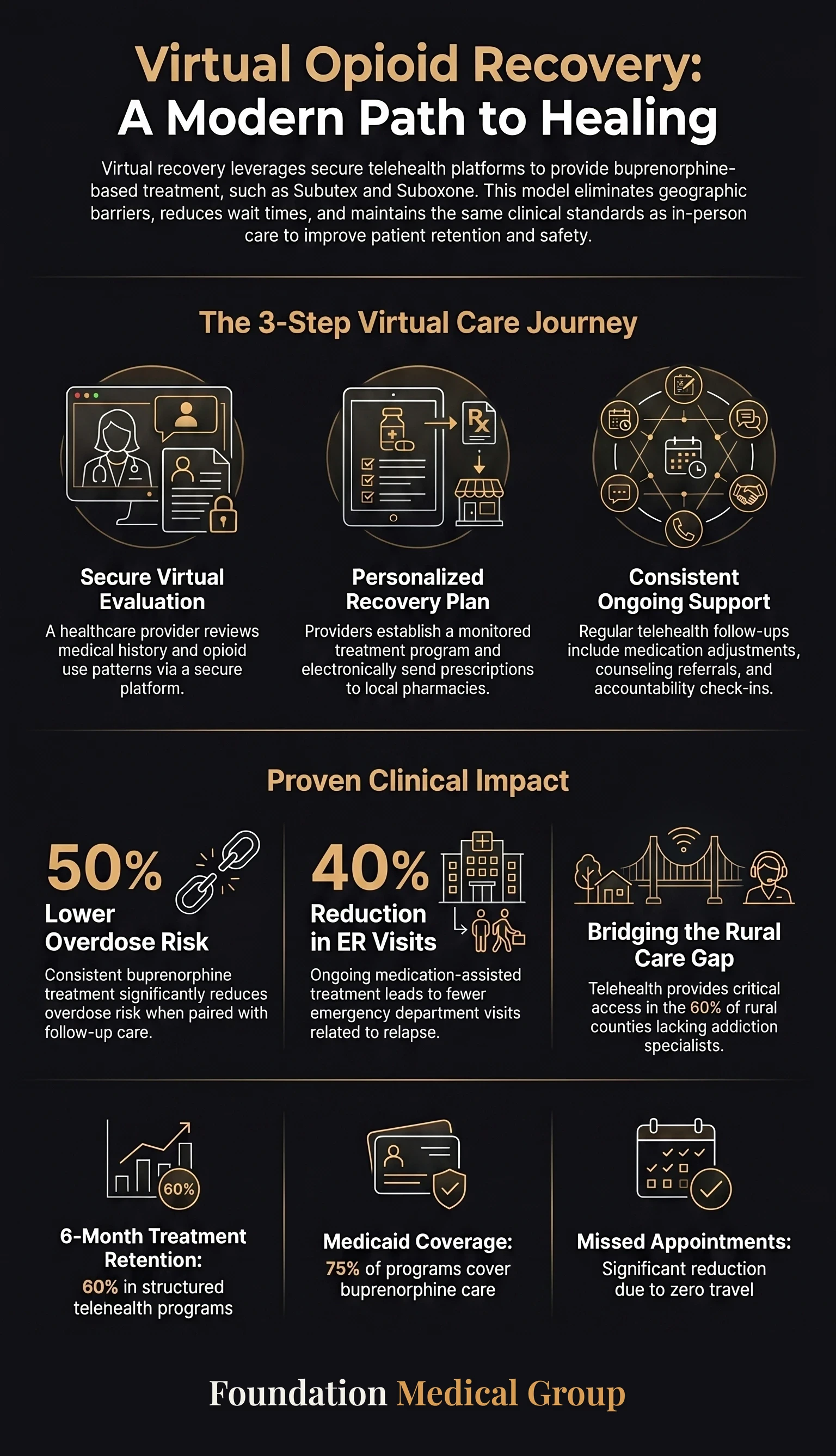
The table below compares online Subutex care with traditional in person programs.
| Feature | Online Care | In Person Care |
|---|---|---|
| Convenience | High | Moderate |
| Insurance Acceptance | Broad | Varies |
| Wait Times | Shorter | Longer |
| Online Access | Yes | No |
FAQ
Do online Subutex doctors accept Medicaid?
Yes. Many accept Medicaid, including TennCare Medicaid, though rules vary by plan and state.
Is Suboxone online safe?
Yes. Suboxone online programs use telehealth and follow the same medical standards as in person care.
How much does Suboxone cost?
Suboxone cost depends on insurance, pharmacy pricing, dosage, and whether generic medicine is used.
Can I stay anonymous?
Care is confidential. An anonymous patient still receives full medical support, monitoring, and follow up.
What happens if I relapse?
Providers adjust the treatment option, revisit the treatment plan, and increase support. Relapse doesn’t mean failure for people in care.
Do telehealth programs replace rehab?
Telehealth doesn’t replace all rehab services, but it can complement rehab coverage and support people after discharge.
Key Takeaways and Next Steps
An online Subutex doctor gives you safe, proven care for opioid use disorder, with buprenorphine and real support behind it. Video care widens access. It also keeps people in treatment when travel or a full clinic would have stopped them cold.
Insurance helps too. Medicaid, private plans, and commercial plans all bring the cost down. Programs run by skilled providers and national addiction specialists deliver the same standard of care over video.
If you’re weighing an addiction treatment program, virtual care is a practical option. Call a qualified doctor or provider and talk through a plan that fits your week.
Sources
- FDA prescribing information, Suboxone sublingual film.
- Sordo and colleagues, Mortality risk during and after opioid substitution treatment, The BMJ (2017).
- Lee and colleagues, X:BOT comparative effectiveness trial, The Lancet.
- DEA and HHS, Expansion of Buprenorphine Treatment via Telemedicine Encounter.
- DEA and HHS, Fourth Temporary Extension of Telemedicine Flexibilities.
- SAMHSA, Buprenorphine telemedicine prescribing.
- Virginia Medicaid, Increasing access to opioid addiction treatment (March 2019).
- KFF, Status of State Medicaid Expansion Decisions.