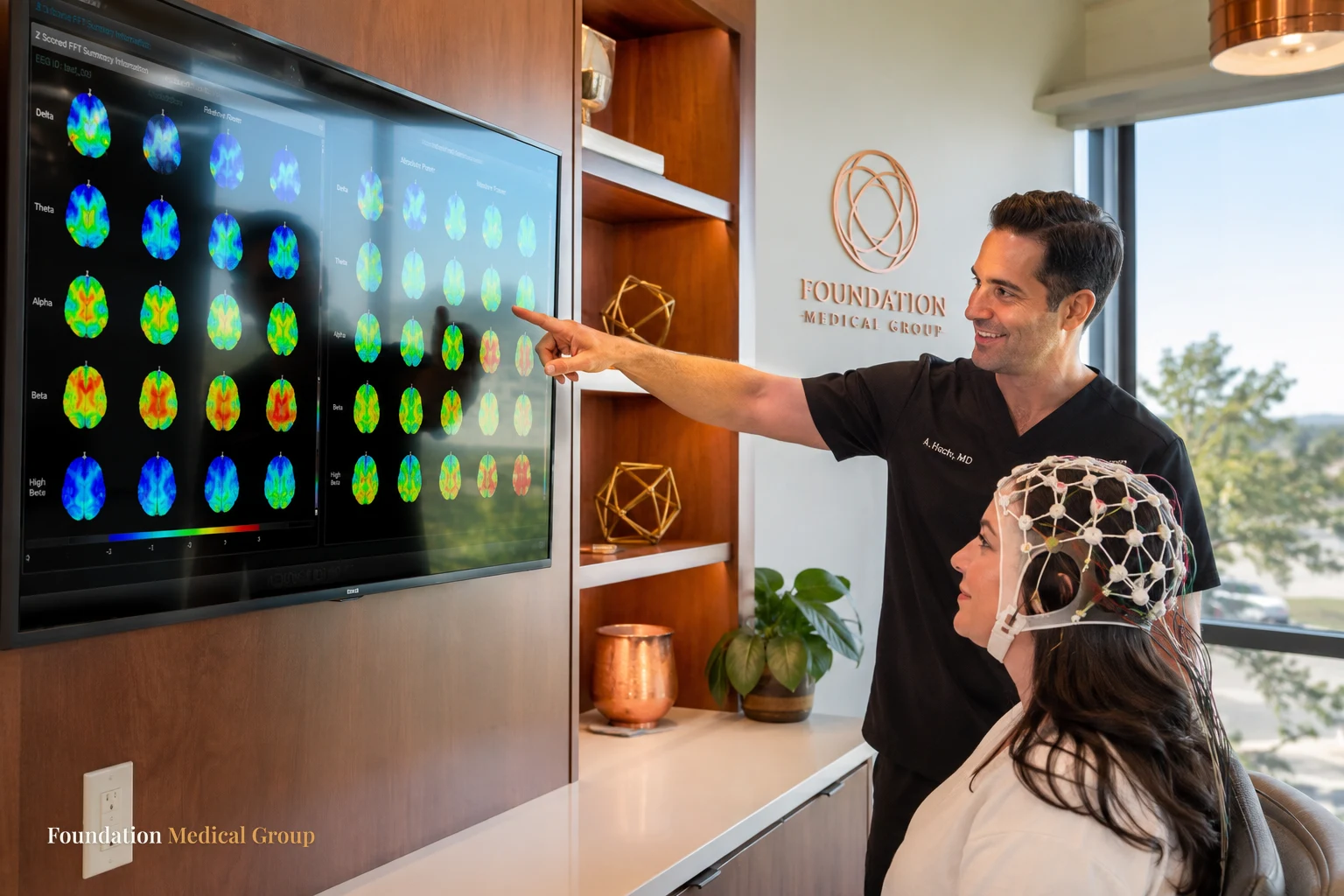
qEEG brain mapping in Dallas is a painless test that turns your brain’s electrical activity into a color-coded map. The “q” stands for quantitative, which just means the recording gets measured and compared to a large database of other brains. That comparison shows where your activity looks typical and where it looks off, so your care team can build a plan that fits your brain, not a generic one.
If you’re in recovery and standard care hasn’t fully explained your focus, mood, or cravings, this kind of map can help. It won’t diagnose you on its own, and it isn’t a cure. Think of it as one more honest source of insight. Below we’ll explain what qEEG is, how it differs from a plain EEG, and how it can make addiction recovery in Dallas feel more personal.
What qEEG Brain Mapping Actually Measures
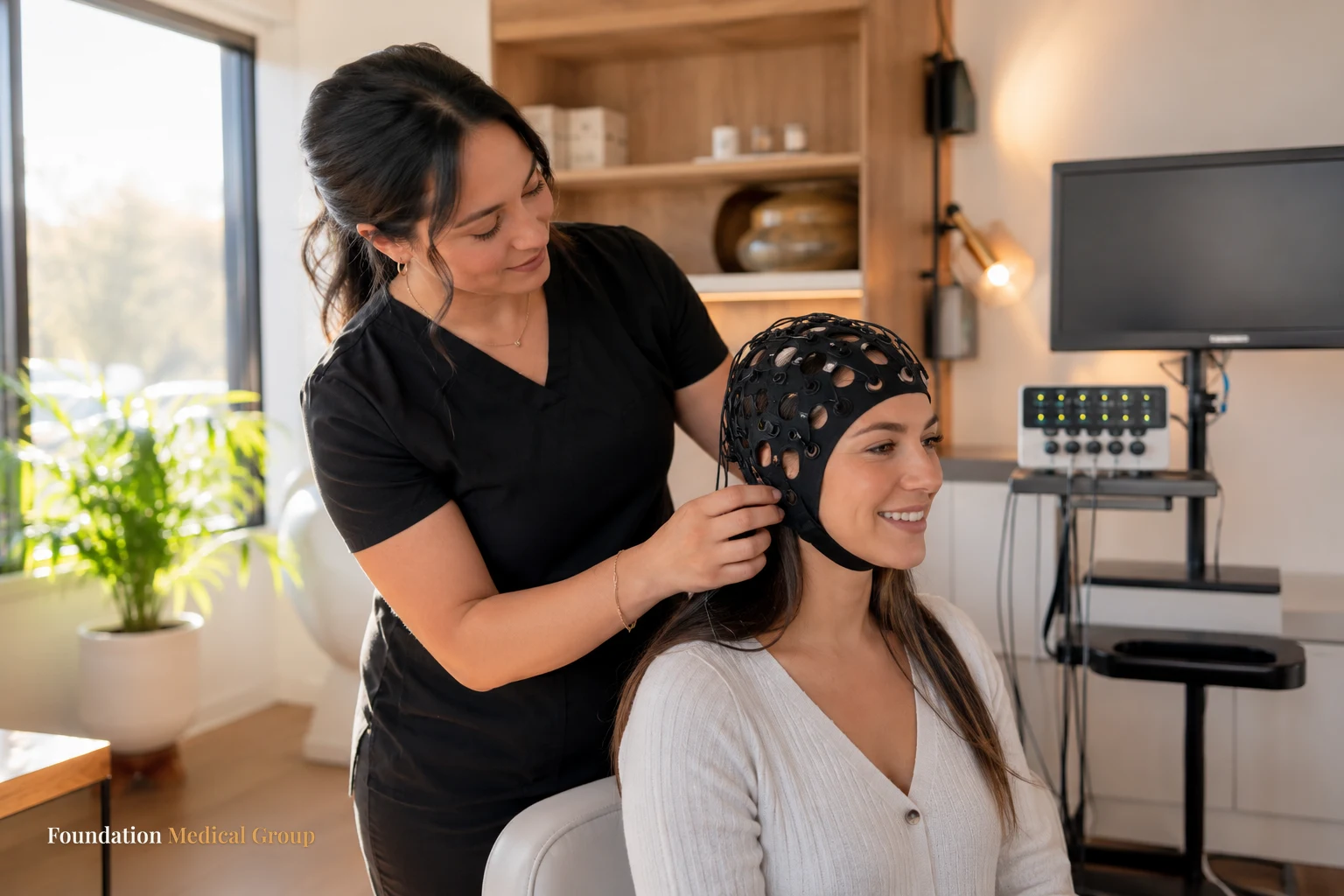
Your brain runs on tiny electrical signals. A qEEG test records those signals with soft sensors placed on your scalp. No needles. No medicine. You just sit still for a short while, and sometimes rest your eyes or focus on 1 simple task.
Software then studies the recording and compares it to a database of many other brains. That’s the “quantitative” part. It sorts your signals into the 5 main brain wave types, from slow delta waves up to fast gamma waves. Then it asks a clear question: how does each one compare to what’s typical for someone your age? The answer becomes a map that a clinician can read.
According to the Substance Abuse and Mental Health Services Administration (SAMHSA), care works best when it treats the whole person, including mental health alongside substance use. A qEEG map fits that goal. It gives your team a brain-based view to add to your story, your history, and your symptoms.
EEG vs qEEG vs Brain Mapping in Plain Words
These 3 terms get mixed up a lot, so let’s sort them out. A plain EEG is the raw recording. It shows brain waves as wavy lines, and doctors read those lines to spot big problems like seizures. It answers a simple yes-or-no question about whether the activity looks typical.
A qEEG takes that same recording and adds math. The software compares your patterns to a large group of healthy brains and scores the differences. Brain mapping is what you get at the end: a visual, color-coded picture of how each region is doing.
Here’s the short version in a table.
| What it is | Plain EEG | qEEG Brain Mapping |
|---|---|---|
| The output | Wavy lines to read | A color-coded map |
| The method | A visual review | A database comparison |
| Main use | Spot seizures and big events | Guide a personal care plan |
| Detail level | Broad | More specific |
So a plain EEG tells you if something big is off. A qEEG goes further and shows patterns, degree, and location. That extra detail is why it’s useful for personalizing recovery care.
How qEEG Personalizes Addiction Recovery
Addiction changes the brain. Research from the National Institute on Drug Abuse (NIDA) shows that repeated substance use reshapes the circuits that handle reward, stress, and self-control. Those changes are a big reason cravings and relapse feel so hard to beat.
A qEEG map can make some of those changes visible. It might show activity that looks slowed in areas tied to focus, or activity that looks revved up in areas tied to stress. That’s not a diagnosis by itself. It’s a clue, and clues help your team choose the right next step.
Here’s how that plays out in real care:
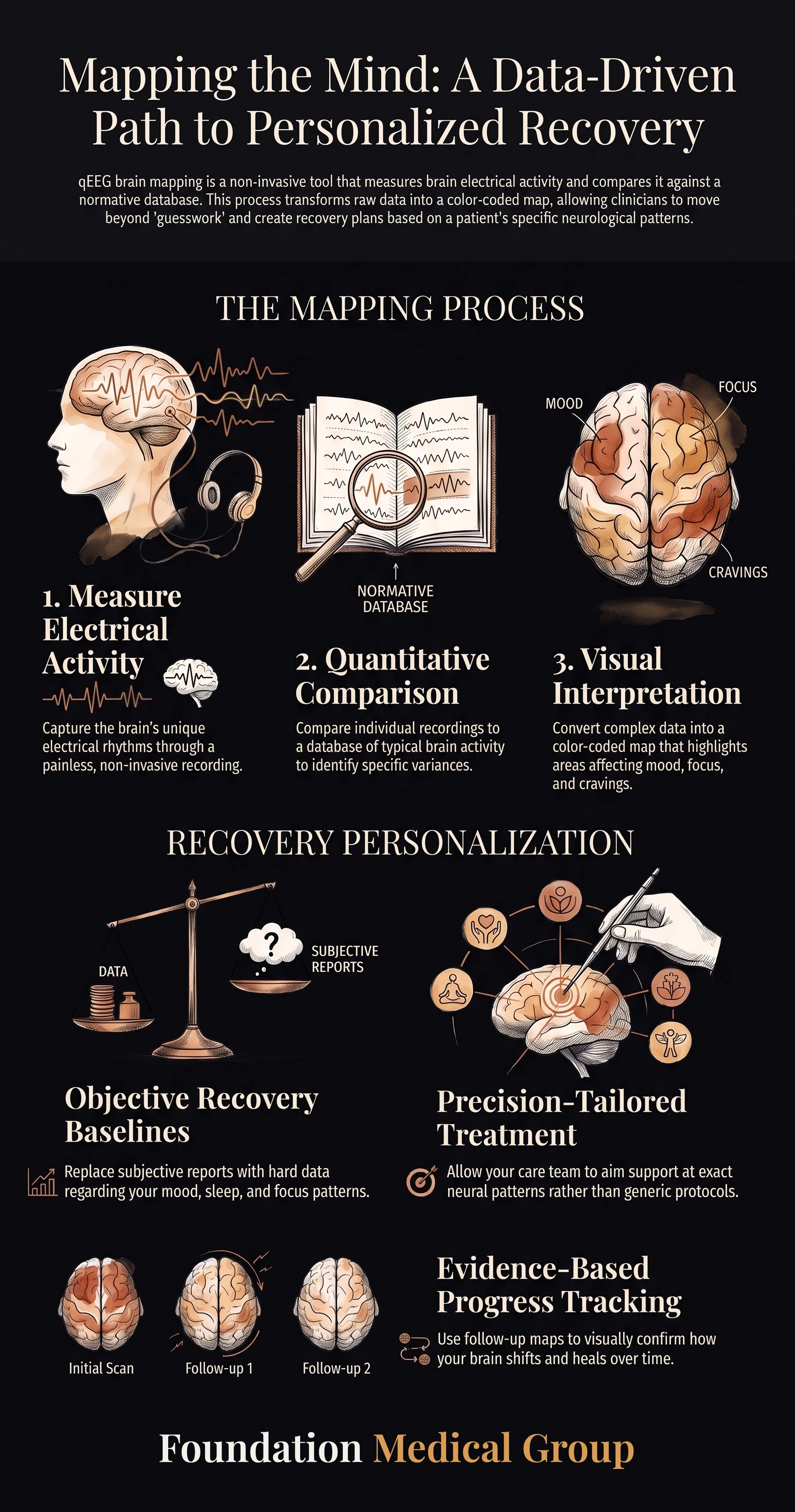
- A clearer starting point. The map adds objective data to what you already tell your doctor about your mood, sleep, and focus.
- A more tailored plan. Your team can aim support at the patterns the map highlights instead of guessing.
- A way to track progress. A later map can be compared to your first one to see what’s shifting over time.
- Better teamwork. The same map can guide your therapist, your prescriber, and any neurofeedback you try.
The point isn’t to replace good clinical judgment. It’s to give your Dallas care team one more solid input so your plan fits you.
How qEEG Fits With Medication Treatment
Medication for opioid use disorder, like Suboxone, works far better alongside real support. SAMHSA describes this combined approach, medication plus counseling and services, as the standard of care. A qEEG map can add a layer of personalization to that plan.
Say your map suggests your stress networks look overactive. Your team might lean into calming, focus-building support while your medication does its job. If focus regions look underactive, that insight can shape your therapy goals too. The medication stays the medication. The map just helps everyone aim better.
This matters most when other issues ride along with addiction, like anxiety or low mood. Our guide on Suboxone and co-occurring depression or anxiety walks through that overlap in more detail.
Who Might Consider qEEG in Dallas

qEEG isn’t for everyone, and that’s fine. It tends to help people who feel stuck or confused by symptoms that won’t fully lift. If your recovery is going smoothly, you may not need it at all.
You might talk to your provider about qEEG if:
- You’re in recovery but still struggle with focus, mood, or lingering cravings.
- Your symptoms feel hard to pin down, and you want a more objective view.
- You’re already working with an integrated Dallas care team and want to personalize your plan.
- You and your doctor want a baseline you can compare against later.
The right move is always a conversation with a qualified clinician. They can tell you whether a map would actually add value for your situation.
What to Expect and the Honest Limits
A qEEG appointment is calm and low-key. A technician places sensors on your scalp with a conductive gel, and you relax while the recording runs. It doesn’t hurt. The visit usually splits into 2 parts: 1 session to record your brain, then a follow-up to review your map together. A trained clinician studies the results before that second visit.
Now the honest part, because you deserve straight talk. qEEG is a supportive tool, not a stand-alone diagnosis and not a cure. The science is still developing, and results depend heavily on careful setup and skilled interpretation. A map should always be read by a trained clinician and weighed alongside your full history.
You can learn more about pricing and coverage on our qEEG brain mapping cost and insurance page. And for the bigger picture on this whole approach, see our brain mapping in Dallas hub.
Infographic: How a qEEG Brain Map Guides Your Care
Frequently Asked Questions
What is qEEG brain mapping in Dallas?
It’s a painless test that records your brain’s electrical activity and compares it to a large database. The result is a color-coded map that helps your Dallas care team personalize your recovery plan. It supports your care, but it doesn’t diagnose or cure on its own.
How is qEEG different from a regular EEG?
A regular EEG shows raw brain waves as lines that a doctor reads by eye. A qEEG adds math, comparing your patterns to many healthy brains, and turns the result into a detailed color-coded map. That extra detail is what makes it useful for personalizing care.
Can qEEG help with Suboxone or addiction treatment?
It can add a helpful layer. The map gives your team objective clues about focus and stress patterns, which can shape your therapy and support. It works alongside medication and counseling, not in place of them.
Is qEEG brain mapping safe?
Yes. It’s non-invasive and medication-free, so nothing enters your body. The sensors only listen to signals your brain already makes. As always, a trained clinician should set it up and read the results.
Does qEEG replace a doctor’s diagnosis?
No, and it shouldn’t. qEEG is a supportive tool that adds data to your clinical picture. Your provider still makes the diagnosis and builds your plan using your full history and symptoms.
Key Takeaways and Next Steps
Let’s bring it together. qEEG brain mapping in Dallas turns your brain’s activity into a color-coded map by comparing it to a large database. A plain EEG shows raw lines, while qEEG adds the math that makes your map personal. That map can help your care team tailor recovery support, especially when focus, mood, or cravings feel hard to explain.
- Remember qEEG is a supportive tool, not a diagnosis or a cure, and the science is still growing.
- Ask your provider whether a map would actually add value for your specific situation.
- Look for a clinic with trained clinicians who can set up the test and read it carefully.
- Use the map to personalize your plan, not to replace real, doctor-led care.
Ready to explore whether qEEG fits your recovery? Reach out to Foundation Medical Group and ask a simple question: would a brain map help my plan? One honest conversation is a strong first step.
Sources
- Substance Abuse and Mental Health Services Administration (SAMHSA), Mental Health and Substance Use Care
- National Institute on Drug Abuse (NIDA), research on brain and behavior in addiction