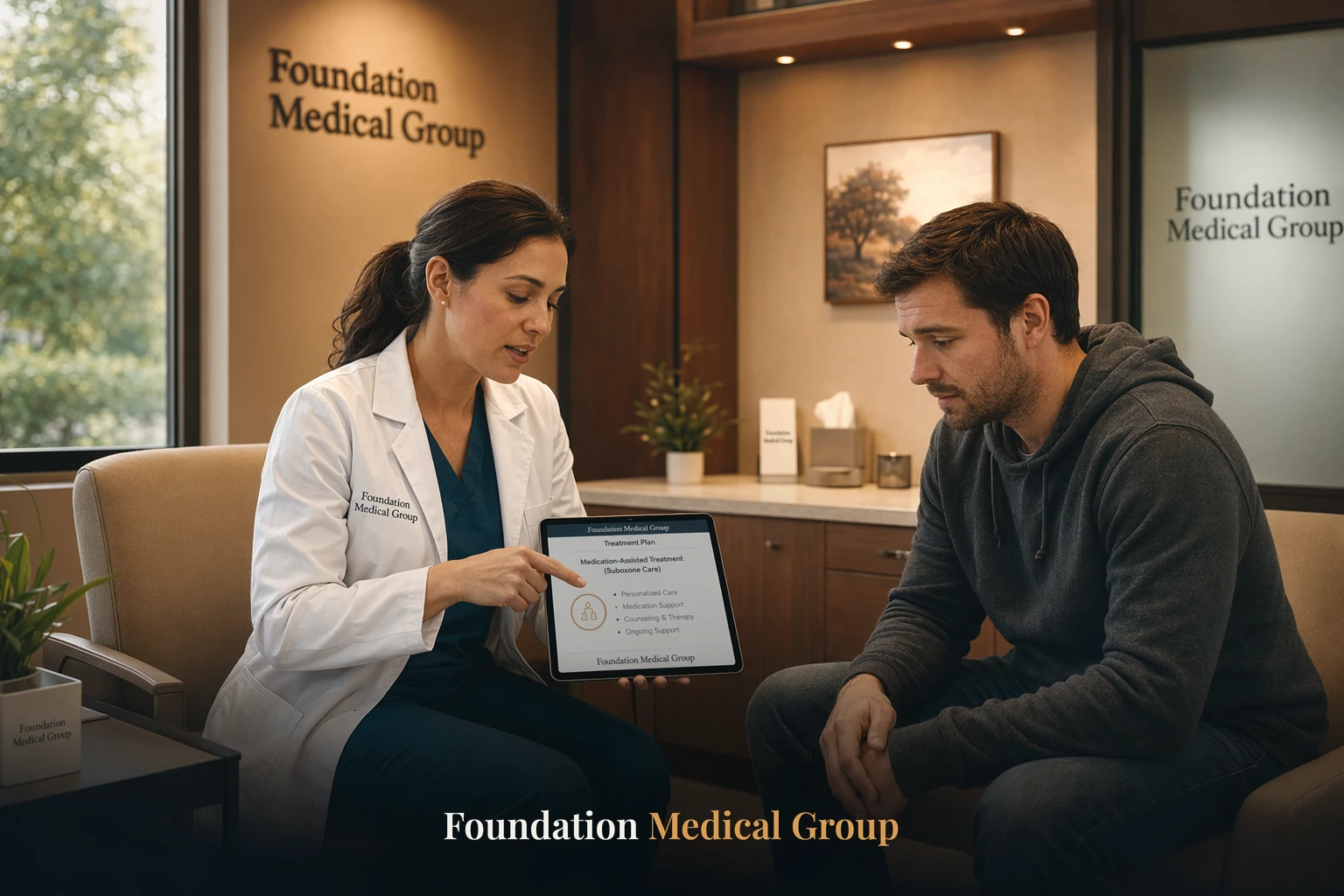
Suboxone clinics in Virginia treat opioid addiction with medicine, not willpower. You can be seen in person, by video, or at a walk in suboxone clinic. Getting started fast matters, because the days you spend waiting are the riskiest ones.
The state’s numbers are finally moving the right way. CDC provisional counts put opioid involved overdose deaths in Virginia at 2,054 for the 12 months ending December 2023. A year later the count was 1,175. For the 12 months ending December 2025 it was 863. Wider access to medicine is a big part of that shift. A licensed treatment center can steady your cravings, write a proper suboxone prescription, and start you on a safer recovery journey.
Introduction to Suboxone Clinics in Virginia
A suboxone clinic Virginia residents rely on does two things well. It prescribes medicine for opioid addiction treatment, and it keeps track of you afterwards. Many run as a full treatment center, so they handle mental health too, not just the drug.
Patients arrive with Medicaid, Medicare Advantage, private insurance, or cash. Care may happen in the office. It may also happen through an online suboxone clinic, which helps when driving or work gets in the way. Some clinics now offer same week intake.
This guide walks through the medicine, how Subutex differs, and how addiction medicine doctors help you move forward.
What Is Suboxone and How Does It Work?
Suboxone mixes two drugs. One is buprenorphine. The other is naloxone. Buprenorphine calms withdrawal and cravings without the full opioid high. Naloxone is there to discourage misuse.
Medication assisted treatment with Suboxone lowers overdose risk and supports long term recovery. We can put a number on that. A 2020 study in JAMA Network Open followed 40,885 people with opioid addiction. Buprenorphine or methadone cut overdose risk by 76 percent at 3 months. At 12 months the drop was 59 percent. Detox alone did not do that. Neither did counseling on its own.
Buprenorphine has been an office based option since 2002, when the FDA approved Suboxone. It is still a core tool in addiction medicine.
Suboxone vs Subutex Differences and Eligibility
Suboxone and Subutex both contain buprenorphine. Subutex leaves the naloxone out. For a few patients that matters a lot.
Doctors weigh safety, pregnancy, and allergies first. Then they write either a suboxone prescription or a Subutex one. Some teams use Subutex during early induction and watch closely. The aim never changes. Keep you steady, keep you safe, keep you moving.
Finding Suboxone and Subutex Doctors Near You
Look for a licensed treatment center approved to prescribe buprenorphine. Many run as a va suboxone clinic network. They serve patients from Richmond out to Fairfax County.
Call before you book, and ask two things. Is the clinic enrolled with your Medicaid managed care plan? Is it taking new patients this month? Teams usually include doctors, nurse practitioners, and behavioral health staff.
- A local suboxone clinic mixes opioid treatment, medication management, and counseling in one place.
- A private suboxone clinic often books faster. The care team is smaller, and the recovery journey feels more personal.
- A larger treatment center may add mental health care, group therapy, and long term planning.
Follow up is where treatment holds. Regular visits, dose changes, and counseling sessions cut relapse risk. An affordable suboxone clinic explains costs, insurance, and other treatment options before care begins.
Telehealth Suboxone Doctors in Virginia
Video care has opened up the whole state. Online suboxone doctors can assess you, manage your dose, and keep you in care. This virtual suboxone clinic model suits people juggling work, kids, or no car.
Federal rules keep that door open. DEA and HHS published a final rule on 17 January 2025. It allows an initial 6 month supply of buprenorphine after an audio only visit. The prescriber has to check your state’s prescription monitoring data first. A later order extended the wider telehealth flexibilities through 31 December 2026.
Ask two things before you sign up. Will they send scripts to your usual pharmacy? Are follow ups by video, or audio only?
Insurance and Medicaid Coverage for Suboxone in Virginia
A treatment center serving Virginia Medicaid patients usually covers visits, medicine, and support services. Medicaid lists buprenorphine as a preferred drug. Prior authorization can still apply to longer plans. Medicare Advantage commonly covers care too.
Private insurance usually does as well. Ask whether the practice bills your insurer, or asks you to pay and claim back. A quick coverage check before intake saves nasty surprises.
What Virginia Medicaid Covers and What ARTS Changed
Virginia rebuilt its Medicaid addiction benefit in April 2017. The program is called Addiction and Recovery Treatment Services, or ARTS. Learn the name. It’s why coverage here beats many states.
ARTS paid for more kinds of care. Residential treatment, intensive outpatient care, peer support, and office based opioid treatment all came in. It also paid providers properly, so more of them signed up. DMAS reported that in the first five months, substance use emergency visits fell 31 percent. Outpatient providers rose 173 percent.
Researchers checked the claim. A 2020 study in Health Affairs used Virginia claims from 2016 to 2018. After ARTS launched, the chance of an emergency visit in any quarter fell 9.4 percentage points among members with opioid addiction. That’s a 21.1 percent relative drop.
Here is what all that means for you.
- Buprenorphine is covered as a pharmacy benefit, under fee for service and managed care alike.
- Office visits, counseling, and peer support are covered services, not extras.
- Your plan still sets its own prior authorization rules, so ask before your first fill.
- Coverage follows the clinic’s enrollment. Check that yours is in your plan’s network.
What Suboxone Treatment Costs in Virginia
Money is the question people hate to ask, so here’s the plain math. CMS publishes a national average drug acquisition cost. It’s roughly what pharmacies pay for a drug.
In the December 2025 file, generic buprenorphine and naloxone 8 mg / 2 mg tablets averaged about $0.72 each. At the common 16 mg daily dose that is $1.44 a day. Call it $43 for 30 days, before insurance. The film form costs more, near $1.94 each, or about $116 a month.
Medicaid covers the medicine and the visits, so most members pay little or nothing. These numbers still matter if you’re between plans, waiting on approval, or paying cash for a first month.
Local Focus on Richmond and Midlothian Clinics
Patients looking for a suboxone doctor richmond option will find full care and mental health screening. Many Richmond programs also handle hepatitis C treatment services and alcohol addiction treatment services in the same building.
A buprenorphine provider in Midlothian often serves nearby counties. Most offer both office and video visits. The focus is early help, offered without judgment.
Coverage Beyond Central Virginia
Access reaches well past Richmond. A suboxone clinic serving Virginia Beach covers the coast. Services near Newport News reach the peninsula.
Telehealth fills the rest of the map. For patients near Fairfax County, video visits cut the drive and keep care steady. Most people choose on visit frequency and counseling depth, not on distance alone.
Comprehensive Care and Advanced Services
Medicine alone is rarely enough. Many programs add group therapy, family counseling, and relapse prevention planning. Some patients do better in an intensive outpatient program, which brings structure without a hospital bed.
Advanced services may include mental health care and referrals for hepatitis C or alcohol treatment. The American Society of Addiction Medicine’s national practice guideline treats counseling as recommended care. It also says medicine should never be withheld from someone who turns counseling down. Both matter. Only one of them keeps you alive.
Infographic: In Person vs Telehealth Suboxone Care in Virginia

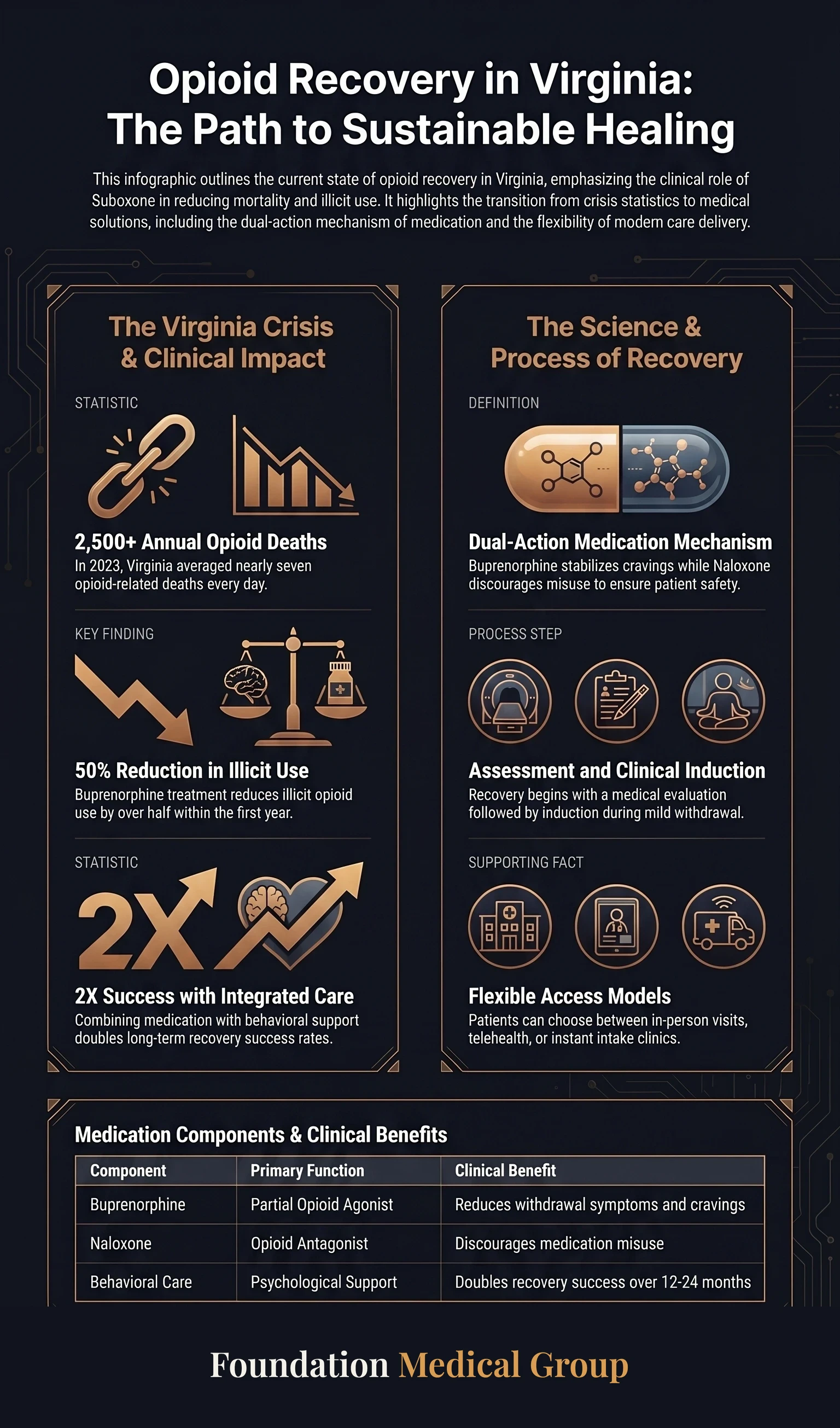
The table below compares care options for patients seeking telehealth providers that accept Medicaid.
| Feature | In Person Care | Telehealth Care |
|---|---|---|
| Visit location | Treatment center based | Home based |
| Visit frequency | Weekly to monthly | Weekly to monthly |
| Medicaid acceptance | Common | Increasing |
| Best for | Physical exams | Rural or busy patients |
Both options work well when a licensed team runs them.
What to Expect at Your First Visit
Your first visit starts with a full medical and substance use history. The provider reviews your medicines and your mental health needs. Lab work may follow. Most first appointments run 45 to 60 minutes.
Then comes induction, and the timing here is strict. The FDA label for Suboxone film sets the floor. Your first dose comes no less than 6 hours after your last short acting opioid. It also waits for clear, objective signs of withdrawal. Dose too early and you can trigger precipitated withdrawal. That feels awful, and it’s avoidable.
Here is the ladder the label lays out.
- Day 1. Start at 2 mg or 4 mg. Step up by 2 mg or 4 mg about every 2 hours, usually to 8 mg.
- Day 2. A single dose of up to 16 mg is normal.
- Finding your dose. The label’s target is 16 mg a day. The usual range runs 4 mg to 24 mg.
- Staying there. Buprenorphine has a half life near 38 hours. Once you’re steady, one dose a day holds you.
Expect weekly visits for the first month. After that, every 2 to 4 weeks is common. Bring a photo ID, your Medicaid card, and a list of your medicines.
How Long People Stay in Care
Staying in care is the whole game. A 2017 review in The BMJ pooled groups of people entering and leaving treatment. On buprenorphine, deaths ran 4.3 per 1,000 person years in treatment. They ran 9.5 after people left. Overdose deaths ran 1.4 in care, and 4.6 out of it.
The gap between episodes is the dangerous stretch. That’s why good clinics chase a missed appointment instead of closing your file.
Video care helps hold that line. A 2023 study in JAMA Network Open looked at 91,914 Medicaid members in Kentucky and Ohio. Starting by video was linked to slightly better 90 day retention in both states. The odds ratios were 1.13 and 1.19. Overdose risk did not rise.
One honest note on counseling. The POATS trial randomized 653 people on buprenorphine and naloxone. Adding structured drug counseling to solid medical care did not improve drug use outcomes. Counseling still helps with the rest of life. The medicine is what carries the safety benefit, so nobody should have to choose between them.
Frequently Asked Questions
Does Virginia Medicaid cover Suboxone treatment?
Yes. Virginia Medicaid covers Suboxone and buprenorphine when prescribed by an approved provider. Some plans require prior authorization or participation in structured support.
Can I start treatment quickly?
Yes. Many providers now offer instant intake, including same week or next day appointments, depending on availability.
What services are included beyond medication?
Most programs offer opioid addiction treatment services that may include group therapy, limited counseling, and referrals for mental health or alcohol addiction treatment services.
Are there different provider models?
Yes. Patients may compare private practices, telehealth programs, and larger treatment centers. The practical differences are wait time, whether counseling is on site, and which Medicaid managed care plans each one accepts.
Is treatment available near me?
Yes. Virginia has multiple treatment center locations, and telehealth fills gaps where local access is limited.
Key Takeaways and Final Thoughts
A treatment center offering Suboxone care can save a life. Medicine, support services, and plain kindness work best together. Virginians now have real choices: office visits, video visits, and Medicaid coverage that pays for both. Start early, and keep showing up. That’s what changes the odds.
Sources
- Suboxone (buprenorphine and naloxone) sublingual film prescribing information, DailyMed, National Library of Medicine.
- Virginia Department of Medical Assistance Services, Addiction and Recovery Treatment Services (ARTS).
- Virginia Department of Medical Assistance Services, Virginia Medicaid agency increases access to opioid addiction treatment.
- Barnes AJ, et al. Hospital use declines after implementation of Virginia Medicaid’s Addiction and Recovery Treatment Services. Health Aff 2020;39(2):238-46.
- Wakeman SE, et al. Comparative effectiveness of different treatment pathways for opioid use disorder. JAMA Netw Open 2020;3(2):e1920622.
- Sordo L, et al. Mortality risk during and after opioid substitution treatment. BMJ 2017;357:j1550.
- Hammerslag LR, et al. Telemedicine buprenorphine initiation and retention in opioid use disorder treatment for Medicaid enrollees. JAMA Netw Open 2023;6(10):e2336914.
- Weiss RD, et al. Adjunctive counseling during brief and extended buprenorphine-naloxone treatment for prescription opioid dependence. Arch Gen Psychiatry 2011;68(12):1238-46.
- Drug Enforcement Administration and HHS, Expansion of Buprenorphine Treatment via Telemedicine Encounter.
- Drug Enforcement Administration and HHS, Fourth Temporary Extension of COVID-19 Telemedicine Flexibilities.
- American Society of Addiction Medicine, National Practice Guideline for the Treatment of Opioid Use Disorder.
- Centers for Medicare and Medicaid Services, National Average Drug Acquisition Cost, 2025.
- CDC National Center for Health Statistics, VSRR Provisional Drug Overdose Death Counts.