
At your first Suboxone appointment, a doctor listens to your story, checks your health, and confirms the diagnosis. Then, once you’re in mild withdrawal, you take your first small dose in the office. The team watches how you feel and sends you home the same day with medicine and a clear plan.
That’s the short version. The longer version has a few steps that surprise people, like why you arrive feeling a little sick on purpose. So let’s walk through the whole day, start to finish. If you’re looking for a Suboxone doctor in American Fork, here’s what your induction day really looks like.
How to Prepare Before You Go
A little prep makes the day smoother. You don’t need much, but a few things help.
The biggest one is timing. Your doctor will ask you to stop using opioids for a set number of hours before you come in. For short-acting opioids that’s often around 12 to 24 hours, though your doctor sets the exact window. Ask the clinic how long to wait, and write it down.
Bring these 4 things: a list of your medicines, any past treatment history, your photo ID, and your insurance card. Eat something light and drink water. If you can, bring 1 trusted person to drive you home. You’ll feel fine to leave, but a calm friend never hurts.
Why You Arrive in Mild Withdrawal

This part feels backward, so let’s make it clear. You come to your first visit already feeling a bit of withdrawal. Not full-blown sick, just the early signs.
Here’s the reason. Suboxone contains buprenorphine, which grabs onto the same spots in your brain that opioids use. If other opioids are still active there, adding Suboxone can push them off fast and make withdrawal worse. Doctors call this precipitated withdrawal, and it’s the one thing we work hard to avoid.
According to the Substance Abuse and Mental Health Services Administration (SAMHSA), buprenorphine is a proven medication for opioid use disorder, and starting it at the right time is what keeps induction safe and comfortable. So the mild sick feeling isn’t a mistake. It’s the green light that your body is ready for that first dose.
The Exam and the Questions
When you arrive, you’ll check in and sit down with the doctor. This visit is longer than your later ones, and that’s a good thing.
The doctor will ask about your health, your history with opioids, and how you’re feeling right now. They may use a simple scorecard to rate your withdrawal signs, things like sweating, restlessness, and a runny nose. They’ll do a short physical exam and order a few basic labs.
None of this is a test you can fail. It’s how the doctor confirms the diagnosis and builds a plan made for you. Answer honestly. The more they know, the better your care.
Taking Your First Dose
Once your withdrawal signs are clear enough, it’s dose time. The medicine is a small film or tablet that goes under your tongue and dissolves. It doesn’t taste like much.
You won’t rush out the door after. The team keeps you in the office for 1 to 2 hours to watch how you respond. If you need a little more, the doctor can give another small dose that same day. This careful, watch-and-adjust approach is how they find the amount that settles your cravings without side effects.
Research from the National Institute on Drug Abuse (NIDA) shows that medications like buprenorphine reduce opioid cravings and withdrawal, which is exactly what you should start to feel during this window.
How You’ll Actually Feel

People often expect a dramatic moment. Usually it’s gentler than that. Within about 1 hour, the early withdrawal starts to ease.
The restlessness quiets. The sick, crawling feeling fades. Most people describe it as finally feeling normal again, not high, just steady and clear. Your mind gets quiet enough to breathe.
Everyone’s different, though. Some feel relief quickly, others take a bit longer or need a small dose adjustment. That’s normal, and it’s why the team stays with you. Tell them exactly how you feel so they can fine-tune your dose.
What to Bring and What Happens
Here’s a simple guide to the day, so nothing catches you off guard.
| Stage | What happens | What you do |
|---|---|---|
| Before your visit | You wait the set hours and feel mild withdrawal | Bring your ID, insurance card, and med list |
| During your visit | Exam, questions, labs, and your first dose | Answer honestly and share how you feel |
| After your dose | The team watches you and adjusts if needed | Stay until they say you’re ready to go |
| Going home | You leave with medicine and a follow-up plan | Fill your prescription and book your next visit |
The pattern is easy to remember. You prepare, you get examined, you dose, and you go home with a plan. No guesswork.
Going Home With a Plan
You won’t leave with just a pat on the back. You’ll leave with a real plan. That usually means a prescription to fill, clear instructions on how to take it, and a follow-up visit booked soon.
Early follow-ups happen more often while your dose settles, then space out as you feel steady. Many later check-ins can be done by video. Keep the clinic’s number close and call if anything feels off. To see how the days after your first dose unfold, read our Suboxone withdrawal and induction timeline. For the bigger picture of care in the state, visit our Suboxone doctor in Utah hub.
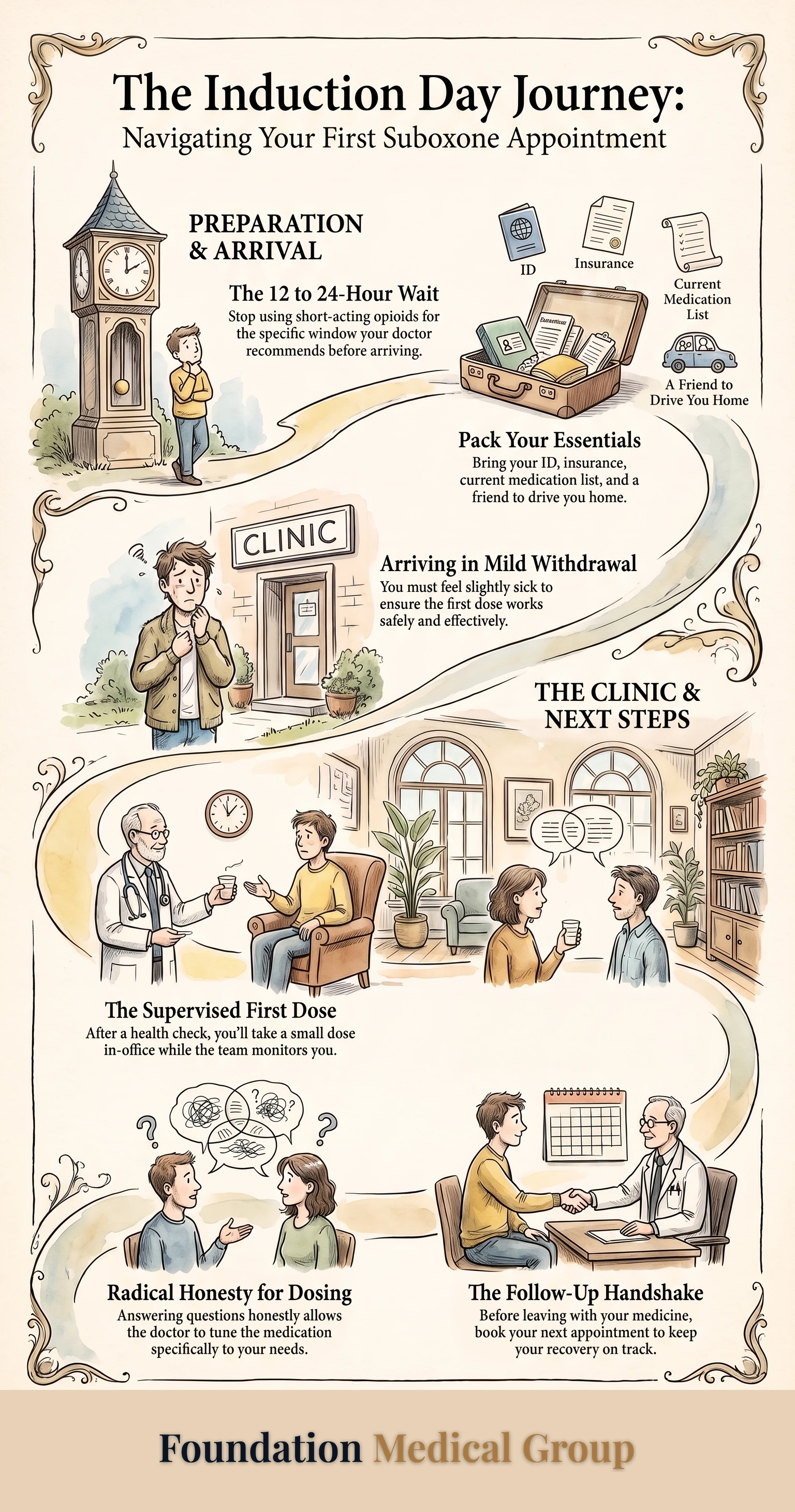
Infographic: Your First Suboxone Appointment, Step by Step
Frequently Asked Questions
Why do I have to be in withdrawal before my first Suboxone dose?
Because starting too early can trigger precipitated withdrawal, which feels worse. Waiting until you’re in mild withdrawal means the opioids have cleared enough for Suboxone to work smoothly and comfortably.
How long does the first Suboxone appointment take?
Plan for a longer visit than your later ones. Between the exam, questions, labs, your first dose, and the watch time after, you’ll likely be there a couple of hours. Ask the clinic for their exact timing.
Will I feel high after taking Suboxone?
No. Most people just feel normal and steady again, not high. The medicine eases cravings and withdrawal so your mind can settle, which is very different from the effect of other opioids.
What should I bring to my first appointment?
Bring your photo ID, insurance card, a list of your medicines, and any treatment history. Eat something light beforehand, and if possible, bring someone you trust to drive you home.
Can I go home the same day as my induction?
Yes. Induction is done in the office, but it’s a same-day visit. Once the team sees your dose is working and you feel steady, you go home with your medicine and a follow-up plan.
Key Takeaways and Next Steps
Here’s what to hold on to. Your first Suboxone appointment in American Fork is a same-day visit with a clear shape: prepare, get examined, take your first dose, and go home with a plan. The mild withdrawal you arrive in isn’t a mistake, it’s what keeps induction safe. Within about an hour of your dose, most people start to feel steady again.
- Ask the clinic exactly how long to wait before your visit, and write it down.
- Bring your ID, insurance card, medicine list, and if you can, a friend to drive.
- Answer every question honestly so the doctor can tune your dose to you.
- Book your follow-up before you leave, since early check-ins matter most.
Ready to take the first step? Reach out to Foundation Medical Group and ask what your first visit would look like. One call turns a scary unknown into a calm, guided plan.
Sources
- Substance Abuse and Mental Health Services Administration (SAMHSA), Medications for Substance Use Disorders
- National Institute on Drug Abuse (NIDA), Medications to Treat Opioid Use Disorder