
A Subutex clinic in Utah Valley treats opioid use disorder with buprenorphine, and no naloxone in the mix. Care runs on a written plan, close watch on the dose, and mental health support built in from the start. Many patients pick this model because it holds medical safety and a flexible outpatient schedule at the same time.
Introduction
Utah Valley still needs medication assisted treatment, and demand runs ahead of supply. Families in Utah County often start searching because access here differs from Salt Lake County and the wider Salt Lake area. Cost, open slots, and mental health support all shape where people begin.
Patients want plain answers. How do Subutex and Suboxone work? What does a suboxone clinic do that a methadone clinic doesn’t? This guide covers how medication assisted treatment works and why addiction medicine oversight matters. It also shows how to judge a clinic on the things that change your week. How fast can they see you? How many visits will the first 30 days take? Is counseling on site, or a referral to someone across town?
Then come behavioral health, the counseling options, and the practical next steps, so you can start with your eyes open.
What Is a Subutex Clinic and How It Treats Opioid Use Disorder
A Subutex clinic is a medical setting that treats opioid use disorder with buprenorphine alone. Buprenorphine cuts cravings and withdrawal, and it lowers overdose risk when it sits inside a real plan. The mortality evidence is the strongest reason to stay in care. Research from Sordo and colleagues, published in The BMJ in 2017, pooled 19 buprenorphine cohorts covering 15,831 people. All-cause deaths ran 4.3 per 1,000 person-years while people stayed in treatment. Once they left, the rate rose to 9.5, which is more than double. Overdose deaths ran 1.4 against 4.6 on the same measure.
Most patients come in for regular outpatient visits with a doctor. The provider checks symptoms, tunes the dose, and tracks progress so a relapse doesn’t sneak up. That rhythm is what lets people hold down work and family while they recover.
Many providers also screen behavioral health at intake. Care may take in one-to-one counseling, a referral to a wellness center, or a call to your own primary care doctor. Treating mental health beside substance use makes both go better.
Subutex vs Suboxone Medical Differences
Subutex holds buprenorphine only. Suboxone adds naloxone to cut misuse. Both are treatment options with real evidence behind them, and both are standard in addiction medicine.
Suboxone is the usual first choice during early stabilization, as part of suboxone treatment. Subutex gets picked for pregnancy, for an allergy, or for another specific medical reason. According to the American Society of Addiction Medicine, a buprenorphine-only plan needs clear notes on file to justify it.
The dosing sits on the label. Buprenorphine sublingual tablets come in 2 mg and 8 mg strengths. Mean half-life runs 24 to 42 hours, which is why one dose a day holds you.
Some patients move between the two as treatment goes on. The call rests on safety, mental health history, how counseling is going, and what you want out of recovery.
Reasons to Switch From Suboxone to Subutex
Pregnancy is the most common reason to switch. Clinical guidance backs buprenorphine without naloxone during pregnancy, as the safer option of the two. Naltrexone, or another route, may come up in the same conversation.
The other reason is a bad reaction to naloxone. When side effects start eating into your day, or your mood, a doctor may change the plan. Buprenorphine stays the base of care either way.
Every change follows addiction medicine standards. The decision weighs relapse risk, counseling needs, and how steady things are right now.
Subutex and Suboxone Clinics Across Utah Valley
Access to Subutex and Suboxone care in Utah Valley is thinner than in Salt Lake County. Some patients drive in from West Valley City. Others use telehealth for follow-ups once they’re stable. Plenty of people weigh travel time against wait time. A clinic 40 minutes away that can start you this week usually beats a closer one booking 3 weeks out. The wait is where the risk sits, not the drive. Which is frustrating, but it’s how the numbers fall.
Providers may offer regular outpatient care, an intensive outpatient program, or a referral to residential treatment if things get worse. That lets the level of care track the phase you’re actually in.
Patients from Tooele County, Wasatch County, and Carbon County often come to Utah Valley providers to keep one team through the whole thing. Steady follow-up is what keeps people on the medicine.
American Fork and Regional Care Options
American Fork providers often serve patients from Cache County, Emery County, and even St George. A local clinic may draw labs on site, or send you out for them. That matters when your plan only pays for in-network draw sites.
Weighing two clinics? Ask each the same three questions. How often will you see me in the first month? Is counseling in house, or by referral? And who covers my prescription when the regular prescriber is away? The answers usually differ on counseling access, visit frequency, and how well behavioral health is joined up.
Checking open slots early is what keeps you from waiting.
Insurance Accepted and Medicaid Coverage
Utah Medicaid covers medication assisted treatment. That takes in a Suboxone prescription, and Subutex when it’s medically needed. Prior authorization confirms the diagnosis and the option chosen.
Commercial plans often cover suboxone treatment and follow-up visits with fewer strings. An office can check the insurance accepted details and give you contact information for a benefits check.
Rules differ state by state, which is why local guidance beats anything on a national page. For example, prior authorization criteria in Utah won’t match a neighboring state’s. Utah publishes its own Medicaid rules, and that’s the page to read before you call.
Telehealth and Extended Care Options
Telehealth handles follow-up visits and dose management for stable patients. It works best next to local labs, counseling sessions, and mental health check-ins.
Some programs mix video with in-person visits. That helps people in rural counties stay in treatment without a long drive every week.
Telehealth works best when the goals are clear and someone is actually watching the numbers.
What to Expect at Your First Visit
Your first visit covers a medical review, a mental health screen, and a look at any past treatment. The provider will walk you through suboxone treatment, Subutex, and the other options on the table.
Induction is watched closely, and honestly, that first week is the part most people dread and then find easier than expected. Later visits focus on staying steady, keeping up with counseling, and planning against relapse.
Some patients later move to an intensive outpatient program, or to residential treatment, if what they need changes.
Infographic Overview of Care Pathways
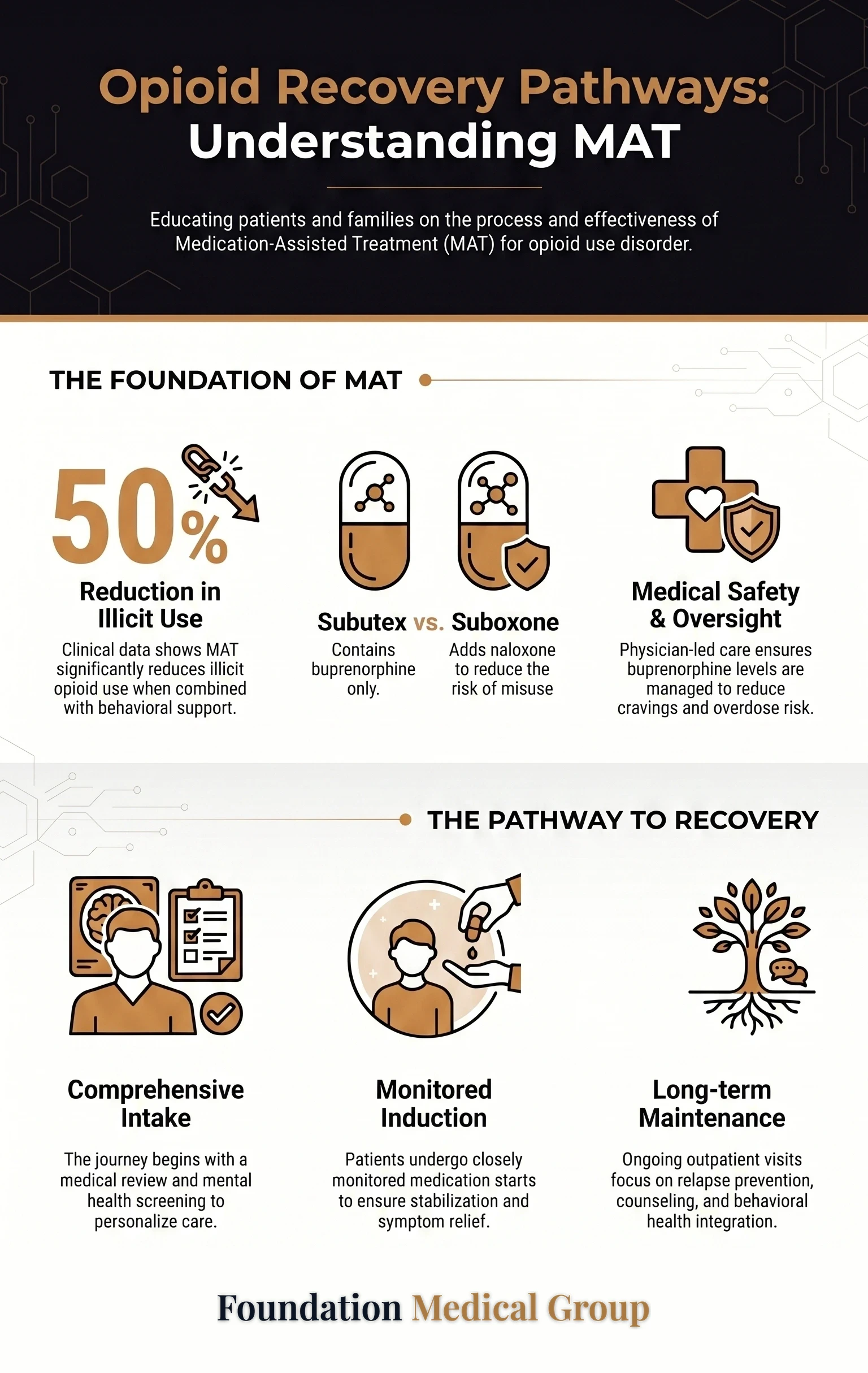
An infographic can set Subutex, Suboxone, methadone clinic services, and other treatment programs side by side. It can also map the path from early stabilization through long-term maintenance and regular outpatient care.
FAQ
What makes a Subutex clinic in Utah Valley different from other providers?
A Subutex clinic in Utah Valley focuses on buprenorphine-only treatment for specific medical needs and emphasizes physician-led oversight and recovery planning.
Do clinics offer more than medication?
Yes. Many providers include counseling, behavioral health screening, and referrals that support whole-person treatment.
Is Suboxone available at the same location?
Many providers offer both Subutex and suboxone treatment depending on patient needs and medical history.
Can medication be adjusted if my recovery changes?
Yes. Providers can adjust dosage, change medications, or recommend additional treatment options based on treatment progress.
How do I find a provider?
Websites and referral lines list availability, site offerings, and contact information to help patients start treatment.
Key Takeaways and Next Steps
A Subutex clinic in Utah Valley serves patients who need buprenorphine without naloxone, plus real medical structure around it. What you can get depends on who has openings, which insurance they take, and how well they tie in behavioral health.
Compare clinics on insurance accepted, how long until the first appointment, and whether counseling happens on site. Name recognition tells you nothing. With the right medication assisted treatment, counseling, and support around it, long-term recovery is a realistic goal.
Sources
- U.S. Food and Drug Administration, buprenorphine sublingual tablets prescribing information, via DailyMed.
- Sordo L, et al. Mortality risk during and after opioid substitution treatment. BMJ 2017;357:j1550.
- Substance Abuse and Mental Health Services Administration, Buprenorphine.
- Buprenorphine, StatPearls, NCBI Bookshelf.
- Utah Department of Health and Human Services, Utah Medicaid.
- American Society of Addiction Medicine, National Practice Guideline for the Treatment of Opioid Use Disorder.