
Telehealth Suboxone doctors that accept Medicaid treat opioid addiction online with buprenorphine-based medicine. You meet a licensed provider by video and get a Suboxone prescription when it fits. The model widens access to proven opioid treatment, and it keeps the cost and the travel down.
Medication assisted treatment works for opioid use disorder and other kinds of substance use disorder. A BMJ meta-analysis of 19 cohorts followed 15,831 people on buprenorphine. All-cause mortality ran 4.3 per 1,000 person-years during treatment, against 9.5 after people left. Overdose mortality ran 1.4 versus 4.6. Online care now extends that protection to people who could never make a weekday clinic visit work.
Introduction to Telehealth Suboxone Treatment With Medicaid
The size of the gap is worth sitting with. NIDA reports that fewer than 1 in 5 people with opioid use disorder get any of these medicines. CDC provisional counts recorded 70,637 drug overdose deaths nationally in the 12 months ending December 2025, down from 106,881 two years earlier. Opioid-involved deaths fell from 80,719 to 45,008. Better, and still nowhere near good. Medication assisted treatment pairs the medicine with support to handle withdrawal and cravings. Suboxone treatment is the most common route, and it holds people steady over years, not weeks.
Telehealth Suboxone doctors that accept Medicaid help most when you can’t get to a clinic. Video visits cut the travel out. Medicaid coverage, including plans like TennCare Medicaid, keeps the suboxone cost down for a lot of families.
This guide is for adults looking for an affordable online Suboxone treatment program. You’ll learn how an online Suboxone clinic works, what Medicaid usually pays for, and how to reach addiction specialists licensed in your state.
What Are Telehealth Suboxone and Subutex Doctors
Telehealth Suboxone and Subutex doctors are licensed providers trained in addiction medicine. They treat opioid dependence over video. After a clinical review, they write a Suboxone prescription when it’s the right call. Care follows federal prescribing rules and privacy standards.
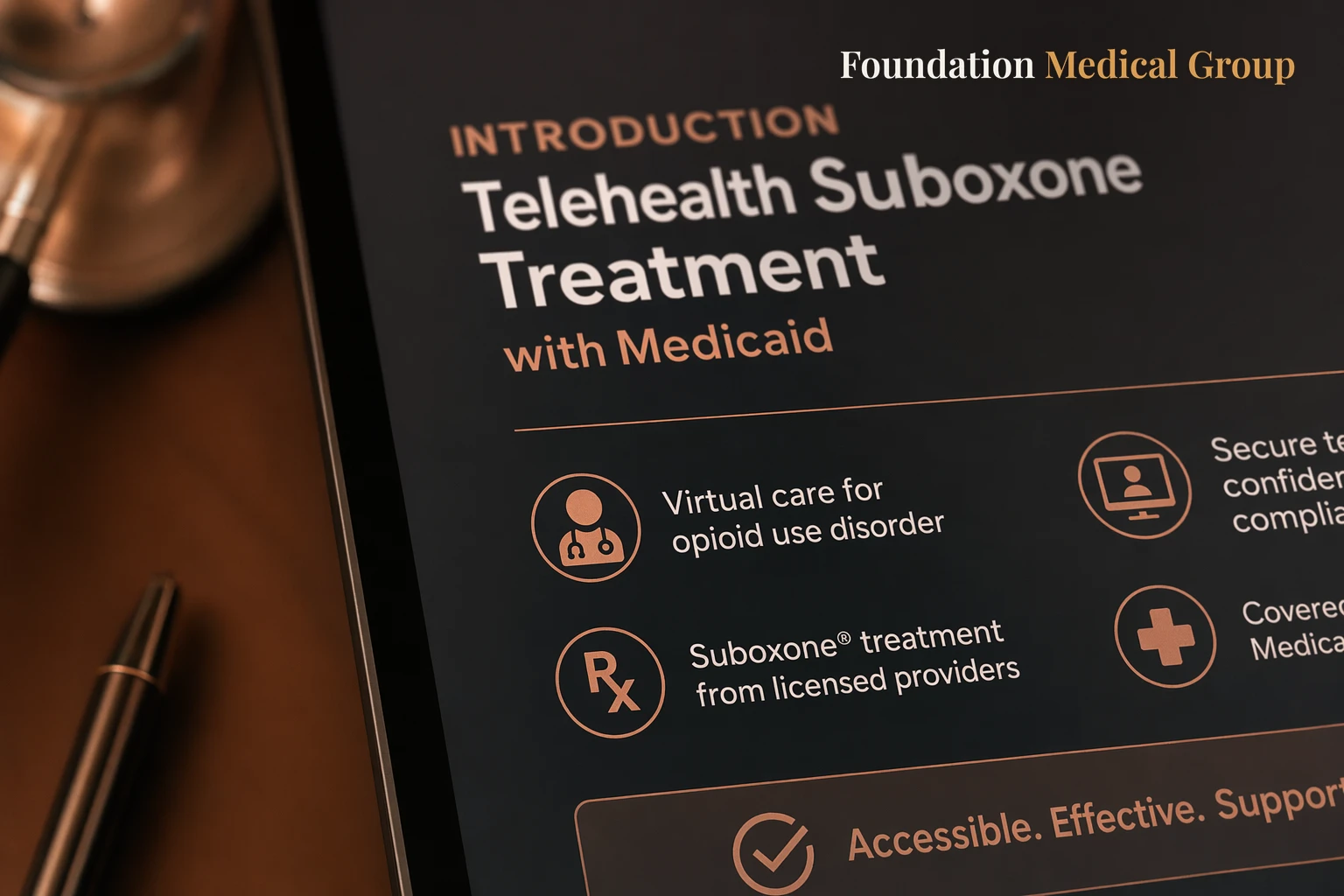
Suboxone doctors treat opioid use disorder with buprenorphine plus naloxone. The film comes in 4 strengths, from 2 mg/0.5 mg up to 12 mg/3 mg. Subutex doctors prescribe buprenorphine on its own, as 2 mg or 8 mg tablets you hold under the tongue, in cases like pregnancy or naloxone intolerance. The FDA approved both on 8 October 2002. So telehealth changed how the medicine reaches you. It didn’t change the medicine.
Online Suboxone doctors that take insurance often work with Medicaid, TennCare Medicaid, and plans like United Healthcare. A visit covers the check, the diagnosis, and a plan built for you. The script goes to a local pharmacy for pickup.
How Medicaid Covers Telehealth Suboxone Treatment
Medicaid pays for buprenorphine treatment in all 50 states. Most programs include Suboxone treatment when it meets medical need. Coverage usually spans the visits, the medicine, and any counseling the plan asks for.
Does telehealth accept Medicaid? Yes, and the federal rules finally settled in 2025. A DEA and HHS final rule from 17 January 2025 lets a prescriber issue an initial six-month supply of buprenorphine by telemedicine, audio-only included, split across several prescriptions. Two conditions come with it. The prescriber checks your state prescription drug monitoring program first, and the pharmacist verifies your ID at pickup. The wider COVID-era flexibilities were extended a fourth time and run through 31 December 2026. Section 1262 of the Consolidated Appropriations Act, 2023 had already dropped the old X-waiver, which widened the pool of doctors who can see you at all.
Does Teladoc accept Medicaid? In some states, yes. Many people would rather use a dedicated online Suboxone clinic that does addiction medicine and nothing else. Searching for a suboxone doctor through a specialist group tends to give you steadier follow-up.
Step by Step How Online Suboxone Treatment Works
Online Suboxone treatment starts with booking a video visit. You fill in intake forms, insurance checks, and consent papers. Then a doctor or nurse practitioner meets you on screen.
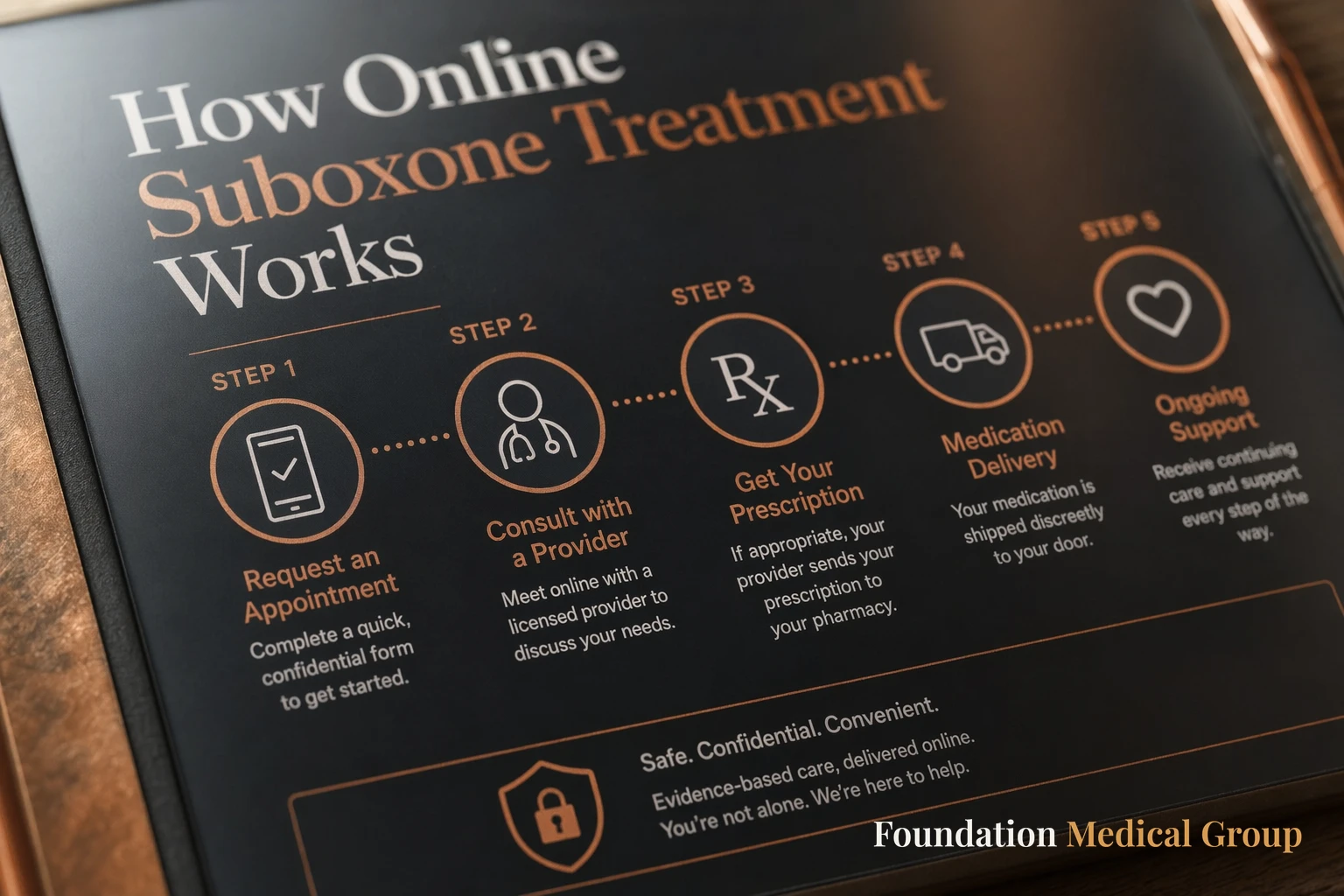
At the first visit, your provider goes through your opioid use history, your patterns, and how you feel right now. They confirm the diagnosis and build a plan. That plan sets your dose, your counseling referrals, and how often you’ll check in.
Induction is the start of the medicine, and it takes the edge off withdrawal. SAMHSA advises staying off opioids for at least 12 to 24 hours and being in early withdrawal first. The FDA label caps day one at 8 mg/2 mg, built in 2 mg or 4 mg steps roughly every 2 hours. Day 2 can reach 16 mg/4 mg. Maintenance runs from 4 mg/1 mg to 24 mg/6 mg. You start at home with clear instructions.
Does starting by screen hold up? A 2023 cohort study in JAMA Network Open followed 41,266 Medicaid enrollees in Kentucky and 50,648 in Ohio. Telemedicine starts had slightly better 90-day retention than in-person ones, with adjusted odds ratios of 1.13 and 1.19. There was no rise in opioid-related nonfatal overdose either.
Suboxone vs Subutex and What Medicaid Covers
Suboxone mixes buprenorphine and naloxone, and it’s the usual first pick for opioid addiction treatment. Many Medicaid programs list it as the preferred medicine.
Subutex holds buprenorphine alone. Doctors may pick it in pregnancy, or when naloxone doesn’t sit well. Searching for subutex doctors near me accepting new patients can help you find the right fit.
Medicaid pays for both when they’re medically needed. Prior authorization may apply, so ask which version your plan prefers. In 2024 Medicare Part D data, generic buprenorphine-naloxone averaged $122.89 per prescription. Brand Suboxone film averaged $473.05. Plain generic buprenorphine tablets averaged $40.34. Same medicine, very different bills. A suboxone clinic can walk you through the rules.
Virginia Telehealth Suboxone and Subutex Clinics
Virginia Medicaid covers online buprenorphine treatment statewide, backed by the Addiction and Recovery Treatment Services benefit. ARTS launched in 2017 and Medicaid expanded in 2019. After that, the number of buprenorphine-waivered prescribers in Virginia grew 148 percent, against 115 percent across southern states that did not expand. Virginia’s drug overdose deaths fell from 2,452 to 1,283 across the 12-month windows ending December 2023 and December 2025.
Texas Telehealth Suboxone and Subutex Clinics
Texas Medicaid supports online opioid treatment for people who qualify. Providers run Suboxone visits and ongoing care by video, which matters in a state where the nearest in-person prescriber can sit 2 counties away. Texas recorded 4,491 drug overdose deaths in the 12 months ending December 2025, down from 5,727 two years earlier.
Utah Telehealth Suboxone and Subutex Clinics
Utah Medicaid allows online Suboxone treatment with licensed providers. Utah is the odd one out in this group. Its overdose deaths moved from 698 to 679 between the 12-month windows ending December 2023 and December 2025, under 3 percent, while the national count dropped about 34 percent. You can still join a program built around long-term care and steady medicine.
Georgia Telehealth Suboxone and Subutex Clinics
Georgia Medicaid and some private plans cover online buprenorphine treatment. Georgia’s opioid-involved deaths fell from 1,843 to 929 across the same 2 windows, close to a halving in 2 years. An online Suboxone clinic can handle opioid dependence and the substance use that comes with it.
Infographic How Telehealth Suboxone Treatment With Medicaid Works
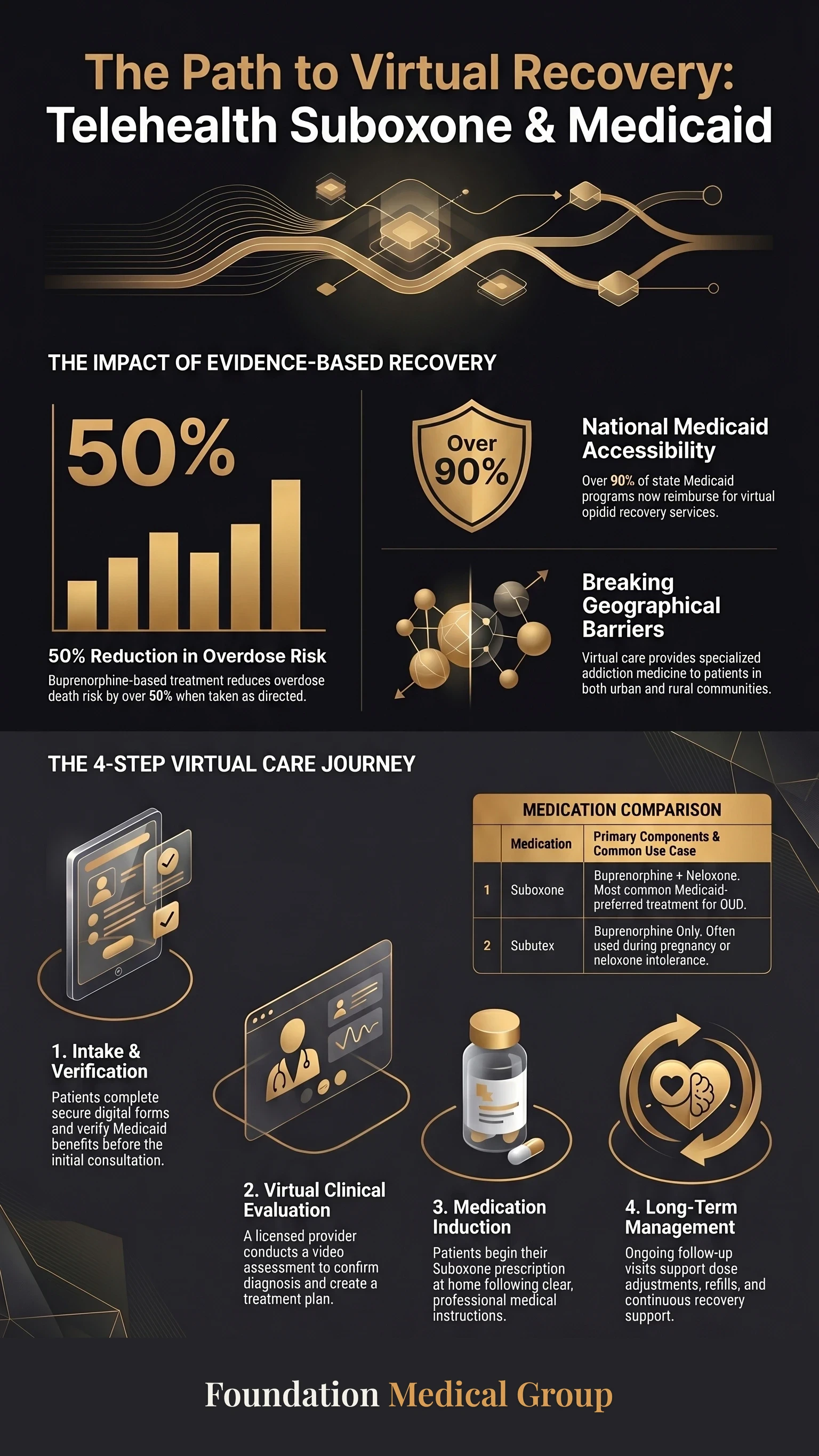
This infographic lays out intake, Medicaid approval, induction, and follow-up. It shows how an online Suboxone doctor supports your care using secure tools and your local pharmacy.
How Brain Mapping Supports Addiction Treatment
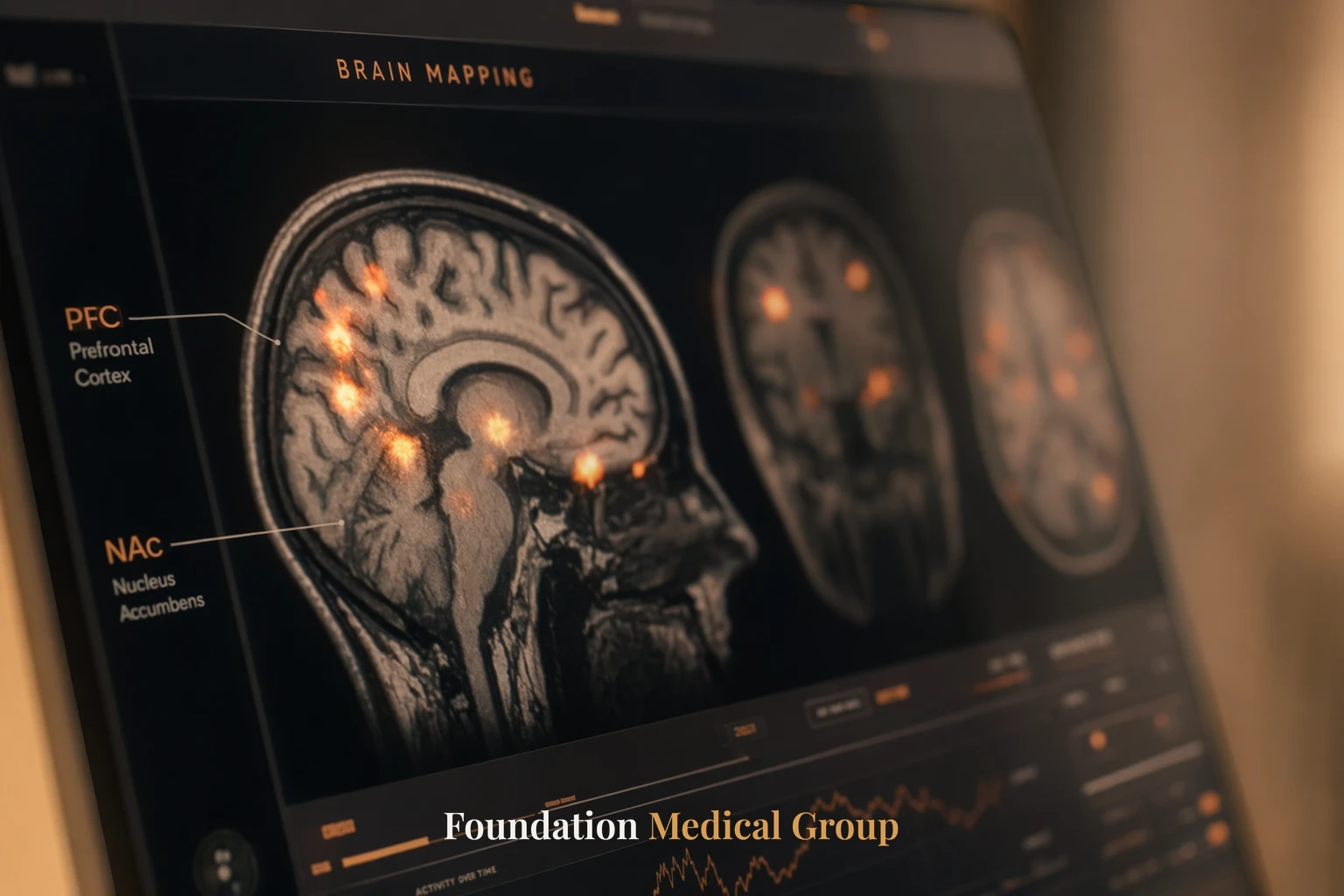
Brain mapping uses EEG and qEEG to study brain activity tied to opioid use and drug abuse. Those readings can sharpen a plan. Brain mapping Virginia clinics use may sit alongside medication assisted treatment.
In Texas, qEEG brain mapping Dallas providers may pair it with Suboxone care by video. Keep your expectations level, though. Aetna’s clinical policy bulletin treats quantitative EEG as medically necessary only as an add-on to a standard EEG, in 7 specific situations. It calls the test experimental for attention disorders, anxiety, and depression. The medicine is doing the heavy lifting here.
How to Schedule an Appointment With Foundation Medical Group
Foundation Medical Group offers affordable online Suboxone treatment for Medicaid patients. We check your benefits before the visit, so you know the suboxone cost up front.
You’ll need a photo ID, your Medicaid details, and a private spot to sit. The ID matters more than it used to, since the 2025 rule puts identity checks on the pharmacist at pickup. Plenty of people searching for an online suboxone clinic end up choosing a provider that handles the whole plan, not just the script.
FAQ
Do telehealth Suboxone doctors that accept Medicaid prescribe medication on the first visit?
Yes. Many providers issue a Suboxone prescription during the first visit when criteria are met and opioid withdrawal is present.
Does telehealth accept Medicaid for addiction treatment?
Yes. Medicaid covers online opioid treatment in most states, including visits and medication.
What is the difference between Suboxone and Subutex?
Suboxone includes naloxone, while Subutex does not. Doctors choose based on medical history and prescribing information.
Can I use Medicaid for online Suboxone treatment in my state?
Yes. Most state programs, including TennCare Medicaid, support online treatment programs with licensed providers.
Is counseling required with Suboxone treatment?
Often, yes. Counseling supports substance abuse recovery and improves outcomes as part of a full treatment program.
Key Takeaways and Final Thoughts
Telehealth Suboxone doctors that accept Medicaid open up opioid treatment to people the old model left out. Video care drops the barriers without dropping the standards.
Pick a provider who knows addiction medicine. A clear plan, the right dose, and steady support are what move people away from opioids and keep them there.
Sources
- Sordo L, et al. Mortality risk during and after opioid substitution treatment. BMJ. 2017;357:j1550.
- Hammerslag LR, et al. Telemedicine Buprenorphine Initiation and Retention in Opioid Use Disorder Treatment for Medicaid Enrollees. JAMA Netw Open. 2023;6(10):e2336914.
- Drug Enforcement Administration and HHS. Expansion of Buprenorphine Treatment via Telemedicine Encounter. Federal Register, 17 January 2025.
- Drug Enforcement Administration and HHS. Fourth Temporary Extension of COVID-19 Telemedicine Flexibilities. Federal Register, 31 December 2025.
- SAMHSA. Statutes, Regulations, and Guidelines (MAT Act).
- SAMHSA. Buprenorphine.
- DailyMed. SUBOXONE sublingual film prescribing information, Indivior Inc.
- CDC National Center for Health Statistics. VSRR Provisional Drug Overdose Death Counts.
- Changes in buprenorphine waivered provider supply after Virginia Medicaid implements ARTS. J Subst Use Addict Treat. 2024.
- Aetna. Clinical Policy Bulletin 0221, Quantitative EEG (Brain Mapping).
- National Institute on Drug Abuse. Medications for Opioid Use Disorder.
- Centers for Medicare and Medicaid Services. Medicare Part D Spending by Drug, 2024.