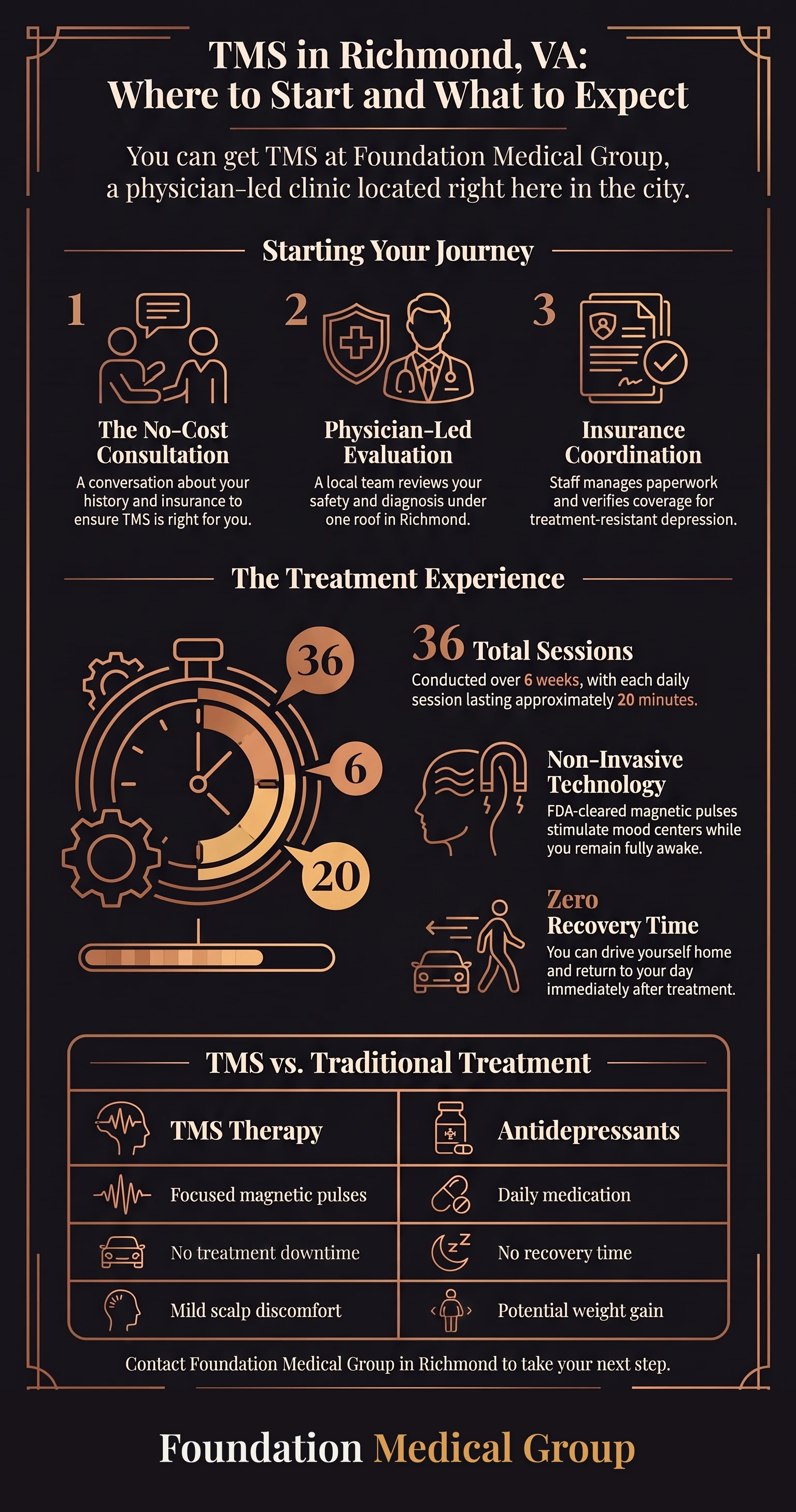
You can get TMS in Richmond, VA at Foundation Medical Group. We’re a physician-led clinic offering transcranial magnetic stimulation right here in the city. It’s FDA-cleared, noninvasive, and done in short weekday sessions while you stay awake. Here’s how to start and what to expect.
What is TMS, in plain words?
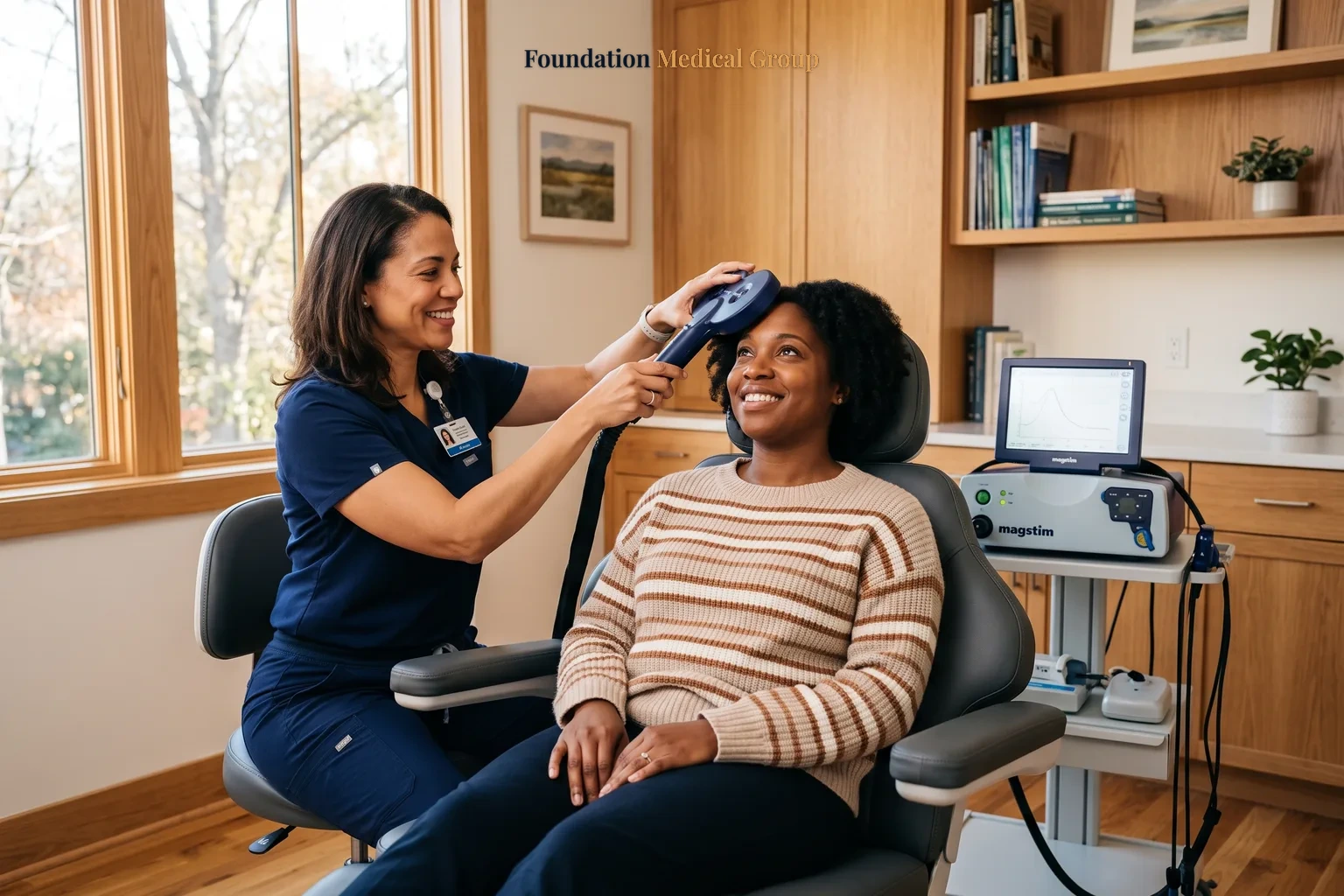
TMS stands for transcranial magnetic stimulation. It uses focused magnetic pulses to gently reach the parts of your brain tied to mood. There’s no surgery. There’s no sedation, and no anesthesia either. You sit in a chair, wide awake, while a small coil rests near your head.
According to the FDA, TMS is cleared as a safe, noninvasive option for depression in adults. Doctors often turn to TMS therapy for treatment-resistant depression. That phrase just means depression that hasn’t lifted after you’ve tried antidepressant medication. If pills haven’t brought you real relief, this may be worth a look. Our guide to TMS for depression explains the science in more depth.
Where can I get TMS in Richmond?
TMS treatment in Richmond is available at Foundation Medical Group, right here in the city. We’re a local outpatient clinic, not a distant referral. Our physician-led team runs the whole treatment process under one roof: the first visit, the sessions, and the follow-up.
That local setup matters more than it sounds. A typical treatment plan means many weekday visits. A nearby clinic keeps that routine simple. You don’t want a long drive before a 20-minute session. If you’ve been searching for TMS therapy near you, starting close to home can help you finish what you begin.
Our care team also works with your referring physician when you have one. We tie TMS treatment into the rest of your care, including talk therapy and medication management. Many patients use several of our services at once, and that keeps everything in step.
What happens at your first visit?
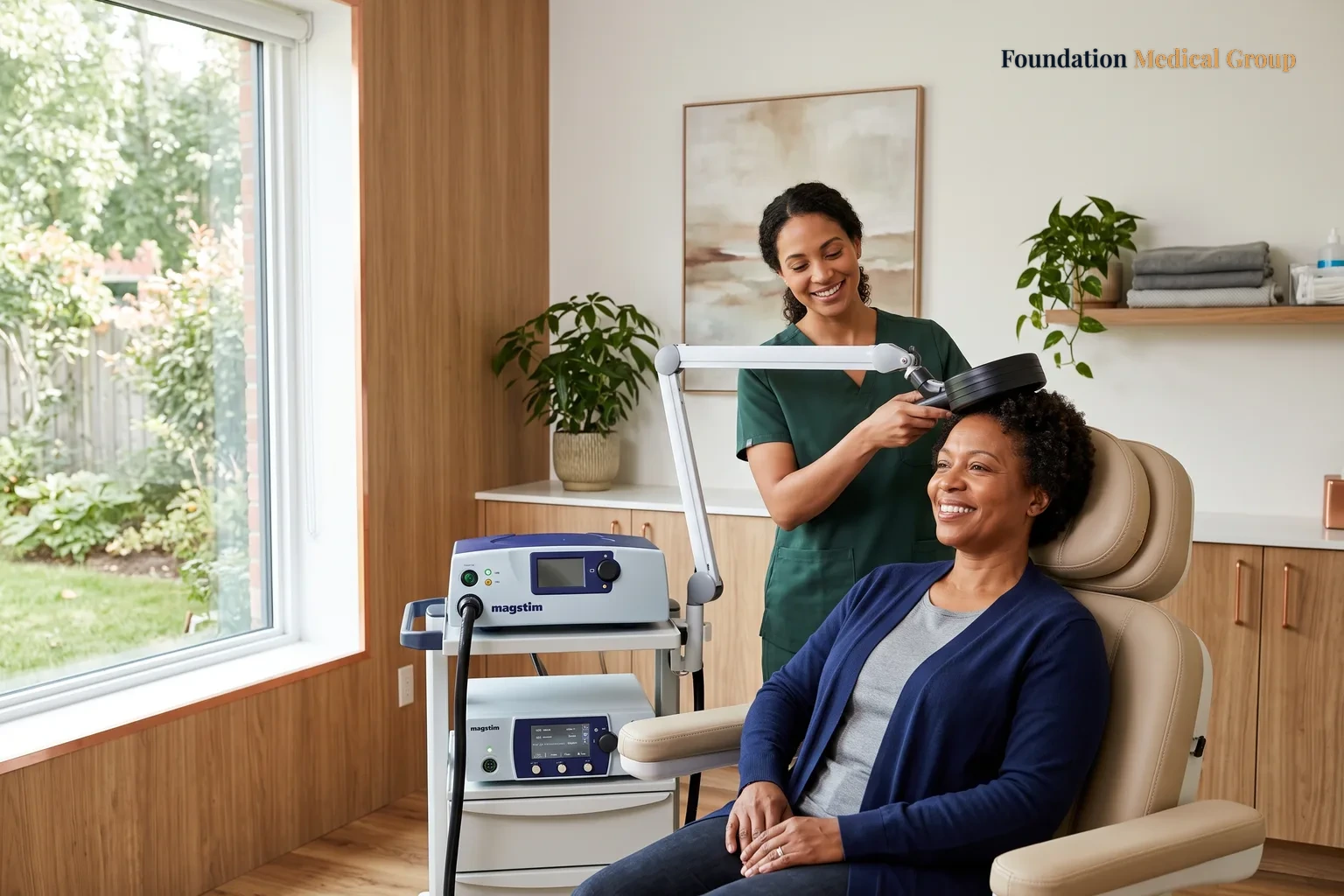
Your first step is a no cost consultation. A consult coordinator asks about your history, your symptoms, and any past antidepressant medication. It’s a real conversation, not a rushed form.
Next comes safety. TMS isn’t right for everyone. People with certain metal implants or deep brain stimulators need a careful review first. Trained medical professionals go over your diagnosis and any other clinical conditions you live with. They’ll answer your detailed questions before anything begins. Your treatment starts only after that check is done.
We sort out insurance coordination up front too. Our staff confirms your benefits and files the insurance paperwork. Many major insurance plans cover TMS for depression that hasn’t responded to medicine, though insurance rules vary by plan. For a fuller look at pricing, read about TMS cost.
What does a TMS treatment plan look like?
A typical treatment plan runs about 36 sessions over roughly six weeks. Treatment sessions run Monday through Friday. Each one lasts about 20 minutes. You stay awake, and most people read, listen to music, or simply rest.
During each visit you feel a light tapping on your scalp as the focused magnetic pulses do their work. Afterward you can drive yourself home and get on with your day. There’s no recovery time, unlike sedation-based options. Most patients keep working and driving right through the plan.
Here is how TMS therapy compares with two other paths for depression.
| What to expect | TMS therapy | Antidepressant medicine | Talk therapy |
|---|---|---|---|
| How it works | Magnetic pulses aimed at the brain | Daily pill that shifts brain chemistry | Guided sessions with a clinician |
| Time in clinic | About 20 minutes on weekdays | A quick check-in every few weeks | Usually weekly |
| Awake and alert | Yes, no sedation | Yes | Yes |
| Common side effects | Mild scalp soreness, short headache | Weight gain, other whole-body effects | None physical |
| Recovery after treatment | None, drive yourself home | None | None |
Patient care doesn’t stop once treatment starts. Ongoing monitoring is built into the plan. We track how you’re doing week by week, and every session runs under the direct supervision of our clinical staff. If something isn’t working, we adjust.
Relief tends to build slowly rather than all at once, so try not to judge the plan by week one. Near the end, some patients move into a maintenance week schedule. Sessions spread further apart, to help protect the progress you’ve made. Treatment plans aren’t one size fits all, and yours can shift as you improve.
Is TMS safe, and what are the side effects?
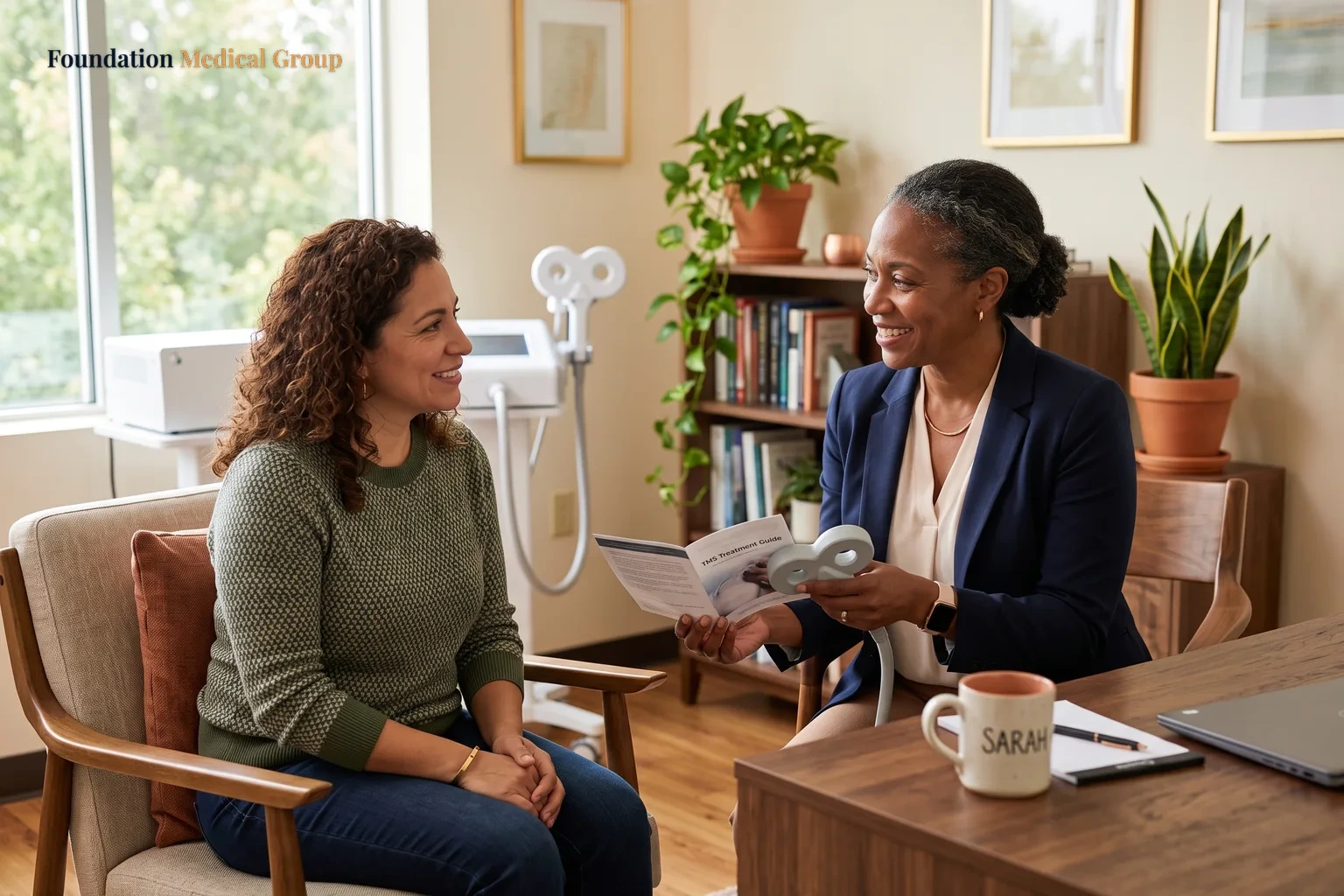
TMS has minimal side effects for most adults. The most common one is mild soreness at the treatment site, or a short headache. These usually fade within the first week or two.
There’s no anesthesia and no drug in your bloodstream. That’s why TMS avoids the whole-body side effects some antidepressant medicines bring, such as weight gain. Serious effects are rare. Seizure is a very uncommon risk, which is exactly why the safety screening matters so much.
Research from the National Institute of Mental Health shows depression is highly treatable. TMS gives you one more proven path when medicine alone hasn’t been enough.
Key Takeaways
- You can get TMS therapy at Foundation Medical Group, a physician-led clinic in Richmond, VA.
- TMS is FDA-cleared, noninvasive, and done while you’re awake, with no sedation.
- A typical plan runs about 36 sessions over six weeks, around 20 minutes each on weekdays.
- Side effects are usually mild, like scalp soreness or a short headache.
- Our team sorts out your insurance and books you a no cost consultation to start.
Sources
- U.S. Food and Drug Administration (FDA), device clearance information for transcranial magnetic stimulation. https://www.fda.gov
- National Institute of Mental Health (NIMH), depression overview and treatment options. https://www.nimh.nih.gov/health/topics/depression
- Mayo Clinic, patient education on transcranial magnetic stimulation and its side effects.
- American Psychiatric Association, clinical resources on depression care and brain stimulation therapy.
Start TMS Therapy in Richmond With Our Team
Taking the first step can feel big, and that’s understandable. You don’t have to sort it out alone. Foundation Medical Group offers TMS therapy right here in Richmond, Virginia, and our physician-led team will walk you through every part of it. Reach out today to book your consultation, and let’s find out together whether this is the right next step for you. If medicine has been your only support so far, our psychiatrist in Richmond can review your full plan and point you to other services and resources that help.